
AK Interactive 1970s-1980s German W123 Sedan 1/35 Model Kit
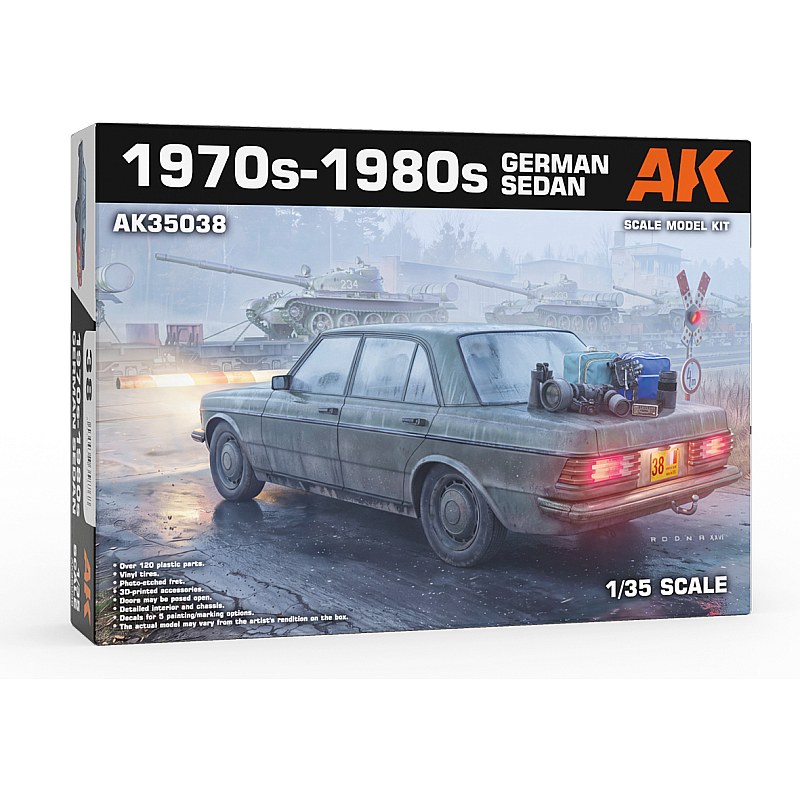
The AK Interactive 1970s-1980s German W123 Sedan (AK35038) is a 1/35 scale plastic model kit representing the pre-facelift version of the classic German saloon car. Featuring over 120 plastic parts, a detailed interior and chassis, opening doors and five marking options, the kit offers several different ways to depict this familiar vehicle.
The main subject is a W123 operated by the French Military Liaison Mission during the Cold War. The kit includes 3D-printed surveillance accessories and printed reference materials associated with the mission’s work monitoring Soviet military activities in East Germany.
The W123 German Sedan
Introduced in 1975, the W123 became one of its German manufacturer’s most successful model series. Its angular styling, solid construction and high build quality appealed to private motorists, business users and taxi operators.
Available with a range of petrol and diesel engines, the W123 developed a reputation for comfort and durability. It was widely used in markets around the world, with saloon production continuing until 1986.
This kit depicts the earlier, pre-facelift version, retaining the distinctive headlight arrangement associated with the original design.
Cold War Surveillance Vehicle
The principal marking option represents a vehicle used by the French Military Liaison Mission, which monitored Soviet military activity in East Germany during the Cold War.
To support this particular subject, AK Interactive includes a selection of 3D-printed equipment associated with observation and reconnaissance work.
- Various cameras and lenses
- Binoculars
- Bags
- Radio scanner
- Printed maps and pages from recognition manuals
These accessories provide additional detail for the French liaison mission version and help distinguish it from the civilian and official-service alternatives.
Kit Features and Contents
The model combines conventional plastic components with photo-etched and 3D-printed details. The doors can be positioned open, allowing the detailed interior to remain visible.
- Scale: 1/35
- Plastic parts: Over 120
- Tyres: Vinyl
- Photo-etched parts: Included
- 3D-printed accessories: Surveillance and observation equipment
- Interior and chassis: Detailed construction
- Doors: Can be posed open
- Marking options: Five
Five Painting and Marking Options
The supplied decals provide a choice of five different W123 vehicles:
- French Military Liaison Mission: Cold War surveillance vehicle operating in East Germany.
- German Police: Official police-service markings.
- THW: Vehicle operated by the German federal technical relief agency.
- Crash-test vehicle: An alternative subject representing vehicle testing.
- Spanish civilian car: A privately owned W123 with an unconventional paint scheme.
The selection covers military liaison work, public services, vehicle testing and private ownership. Together with the opening doors and additional surveillance equipment, these options allow the model to represent several distinct aspects of the W123’s service during the 1970s and 1980s.