Pantasy Retro 90s Desktop PC (1634pcs) PA85005
Out of stock
SKU: PA85005
 Pantasy
Pantasy
Retro 90s Desktop PC
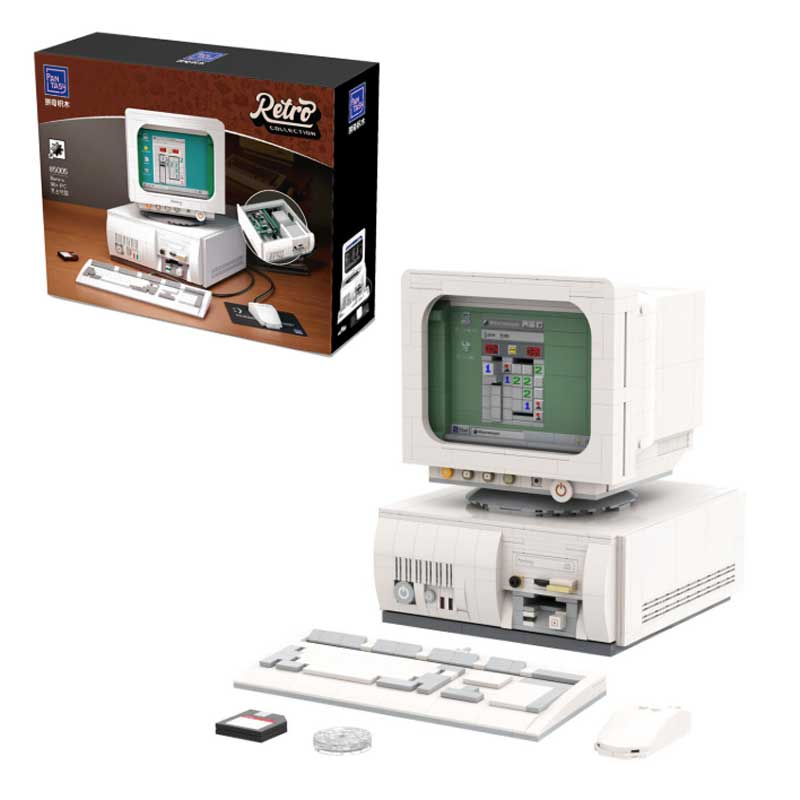
This brick model from Pantasy recreates a traditional 1990s desktop personal computer, complete with a tower case, monitor, keyboard, and mouse. Designed to capture the look and feel of early home computing, the model brings together a range of familiar elements from the era. As part of the brick kit range, it offers a detailed and engaging build with strong display appeal.
Constructed from 1,634 pieces, the model features a high level of detail both inside and out. The exterior reflects the boxy design typical of computers from the period, while the interior is accessible and includes components such as a motherboard, graphics card, and CPU heatsink. Additional accessories such as floppy disks and compact discs are included, along with an opening CD drive that adds a functional element to the build.
The monitor includes interchangeable screen designs, one of which features a classic Minesweeper-style display, adding a nostalgic touch. The combination of external and internal details makes this model suitable for display in a home or office setting, particularly for those with an interest in retro technology. Its size and structure give it a noticeable presence once assembled, making it a standout piece within a collection.
- Brick-built model of a 1990s desktop personal computer
- 1,634-piece detailed construction
- Includes monitor, keyboard, and mouse
- Accessible interior with motherboard and components
- Opening CD drive with included discs and floppy disks
- Interchangeable monitor screen designs
- Approximate dimensions: 18.9cm length, 20cm width, 24cm height
- Suitable for ages 6 and above
Personal computers in the 1990s played a major role in bringing computing into homes and offices on a large scale. Systems from this period were often characterised by bulky tower cases, CRT monitors, and removable storage media such as floppy disks and CDs. These machines laid the foundation for modern computing, supporting early gaming, productivity software, and internet access. This model reflects that era, offering a detailed representation of the technology that defined a generation of digital development.
Related products