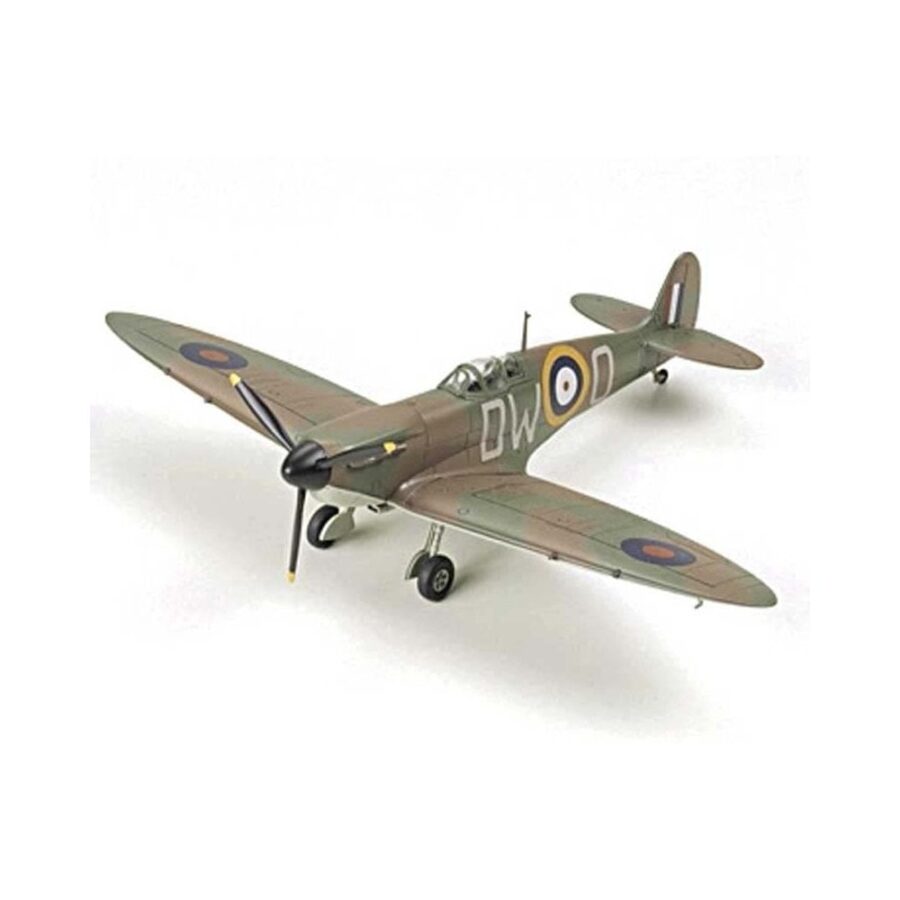

Tamiya Plastic Model Kit
Tamiya Supermarine Spitfire Mk.I (1/72)
This 1/72 scale Tamiya model kit recreates the iconic Supermarine Spitfire Mk.I, a cornerstone of Britain’s aerial defence during the early years of the Second World War. Renowned for its elliptical wing design and aerodynamic profile, the Spitfire Mk.I stood as a symbol of British ingenuity and determination, particularly during the Battle of Britain.
The kit features finely moulded plastic parts that replicate the Spitfire’s streamlined form with excellent accuracy. Included are authentic panel lines, cockpit details, and undercarriage components. This kit is ideal for modellers seeking a historically significant subject with clean construction and excellent fit.
- 1/72 scale plastic model kit
- Highly detailed wing and fuselage mouldings
- Realistic cockpit with fine interior features
- Includes markings for early-war RAF squadrons
- Clear instructions for straightforward assembly
History
The Supermarine Spitfire Mk.I first flew in 1936 and entered RAF service in 1938. Designed by Reginald J. Mitchell, the aircraft featured cutting-edge technology for its time, including a monocoque fuselage, retractable landing gear, and a powerful Rolls-Royce Merlin engine. The Mk.I variant was armed with eight 7.7mm Browning machine guns and capable of reaching speeds over 580 km/h.
Its greatest legacy was forged during the Battle of Britain in 1940, where it, alongside the Hawker Hurricane, helped defend British skies from the Luftwaffe. The Spitfire’s agility, speed, and climb rate made it a formidable opponent, contributing significantly to the eventual British victory in the air. Its impact went beyond performance, becoming a lasting symbol of resistance and engineering excellence.