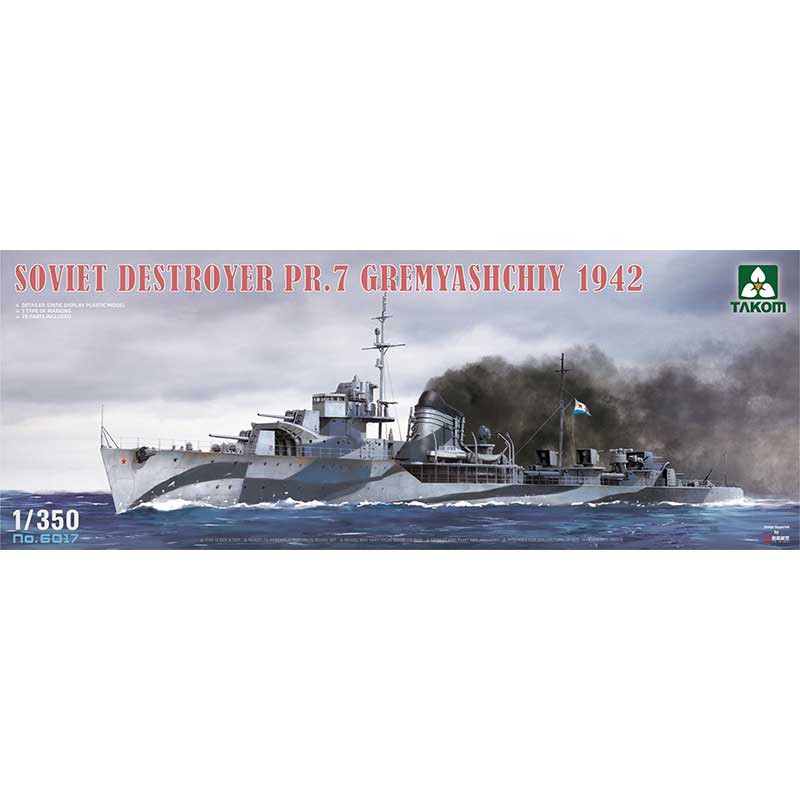

Takom Plastic Model Kit
Soviet Navy PR 7 ‘Gremyashchiy’ Destroyer 1942 (1/350) 06017
This 1/350 scale kit from Takom reproduces the Soviet destroyer Gremyashchiy, one of the most notable vessels of the Northern Fleet during World War II. Part of the Project 7 (Gnevny class), this ship was commissioned in 1938 and went on to become one of the most active Soviet destroyers of the war.
- 1/350 scale model kit
- Length: 323mm
- Includes photo-etch detail parts
- Armament: 4 × 130mm B-13 guns, 2 × triple 533mm torpedo tubes
- Additional AA weaponry, mines, and depth charges
The kit captures the wartime configuration of the destroyer during 1942, when it played a vital role in Arctic convoy escort duty, protecting Allied supply ships bound for Murmansk and Archangel. With fine detailing and photo-etched parts, this model provides an authentic representation of the Gnevny-class destroyer.
History
Laid down in Leningrad and commissioned in 1938, Gremyashchiy (meaning “Thunderous”) displaced around 1,600 tons and was capable of speeds up to 37 knots thanks to its geared steam turbines. It was heavily armed for its size, with four 130mm main guns, torpedoes, anti-aircraft weapons, and the ability to deploy mines and depth charges. During 1942, the ship was heavily engaged in Arctic waters, escorting the critical PQ and QP convoys carrying Lend-Lease supplies. It frequently clashed with German submarines, aircraft, and surface vessels operating from Norway. Surviving the conflict, the destroyer remained in service through the 1960s before being scrapped in 1969, marking the end of a distinguished career in Soviet naval history.