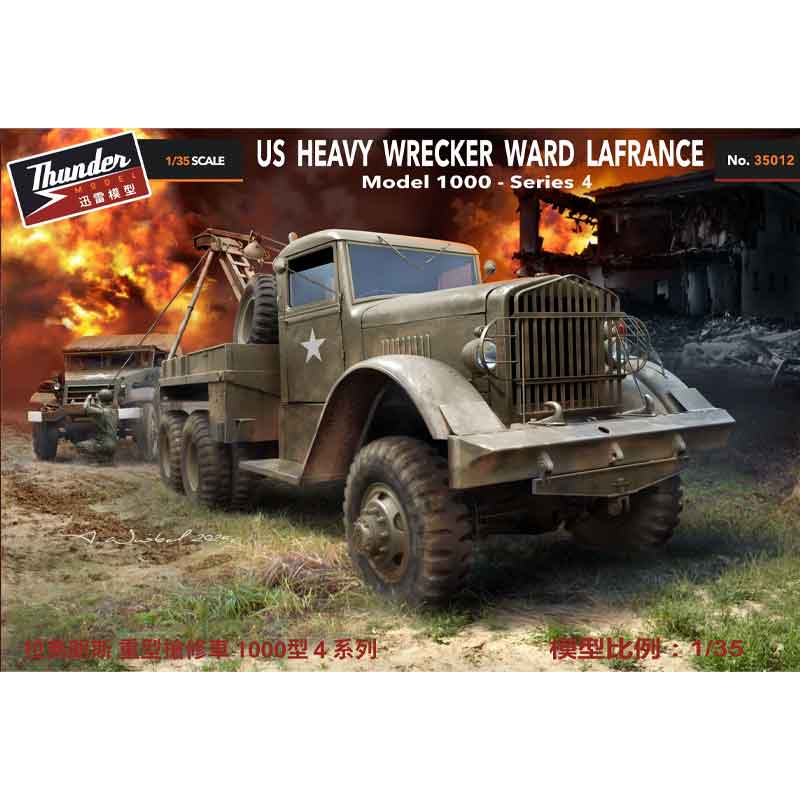

Thunder Model Plastic Model Kit
LaFrance Heavy Wrecker Series 4 (1/35) 35012
This detailed 1/35 scale plastic model kit by Thunder Model replicates the LaFrance Heavy Wrecker Series 4, a robust military recovery vehicle used during WWII. Introduced in 1943, the Series 4 was produced in a batch of 400 units and featured a curved-end extended crane boom, larger fuel filler caps, an improved air filter, and military-spec instrumentation.
- Includes 8 sprues with 590 plastic parts
- 8 clear parts for realistic glazing
- Photo-etched detail parts included
- 8 3D printed parts for added realism
- Decals for accurate marking options
- Scale ropes and chains provided
- Highly detailed crane and vehicle interior
This kit offers excellent build potential for military vehicle enthusiasts and diorama builders looking to add a rugged recovery vehicle to their WWII scenes.
Note: This model kit requires assembly and painting. Glue, paints and tools are not included and must be purchased separately.
History:
The LaFrance Heavy Wrecker Series 4 was an evolution of earlier designs developed for the US military’s logistics and vehicle recovery needs. By 1943, the Series 4 incorporated several updates including a more efficient air filtration system, larger fuel filler caps for faster refuelling, and an extended crane boom with a curved end for increased reach. These wreckers were deployed in various theatres of WWII, supporting armoured units and ensuring battlefield recovery of damaged vehicles. Known for their reliability and distinctive profile, they became a backbone of Allied maintenance operations during the later war years.