

Tamiya Plastic Model Kit
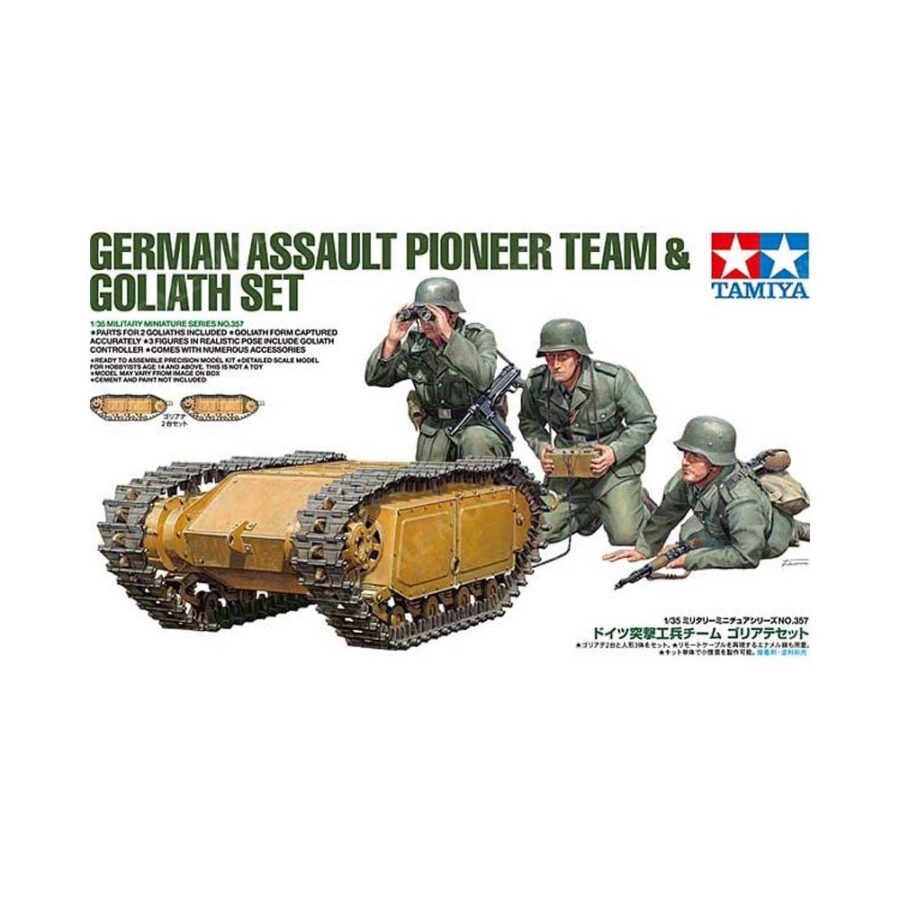
German Pioneer Team w/ Goliath (1/35) 35357
This 1/35 scale model kit from Tamiya recreates a German assault pioneer team with the Goliath tracked demolition vehicle. The Goliath was a small, remote-controlled explosive carrier designed to disrupt enemy fortifications and armoured targets. Roughly 1.5 metres in length, it could carry up to 60 kilograms of explosives and was controlled via a wired remote system. Used predominantly by Sturmpionier (assault pioneer) units, the Goliath provided a method of engaging enemy positions without exposing personnel to direct fire.
- Highly detailed model of the Goliath demolition vehicle
- Includes assault pioneer figures in lifelike poses
- Detailed control cables and spooling mechanism
- Accessories include satchel charges and equipment
- Ideal for diorama and late-war scenarios
- Markings and uniform details for late WWII operations
Note: This model kit requires assembly and painting. Glue, paints and tools are not included and must be purchased separately.
History
The Goliath was developed by the German Army during WWII as a remotely-operated demolition device. First used in 1942, it was designed to breach enemy bunkers, fortifications, and armour using its sizeable explosive payload. Controlled via a triple-strand cable, it could be operated from cover, reducing direct risk to German troops. Over 7,500 units were built in both electric and petrol-powered versions. Deployed across all fronts, Goliaths saw limited success due to their low speed and vulnerability, but they remain an early example of remote weapon systems. They were used during defensive operations in Normandy and the Eastern Front by specialised assault engineer units.