
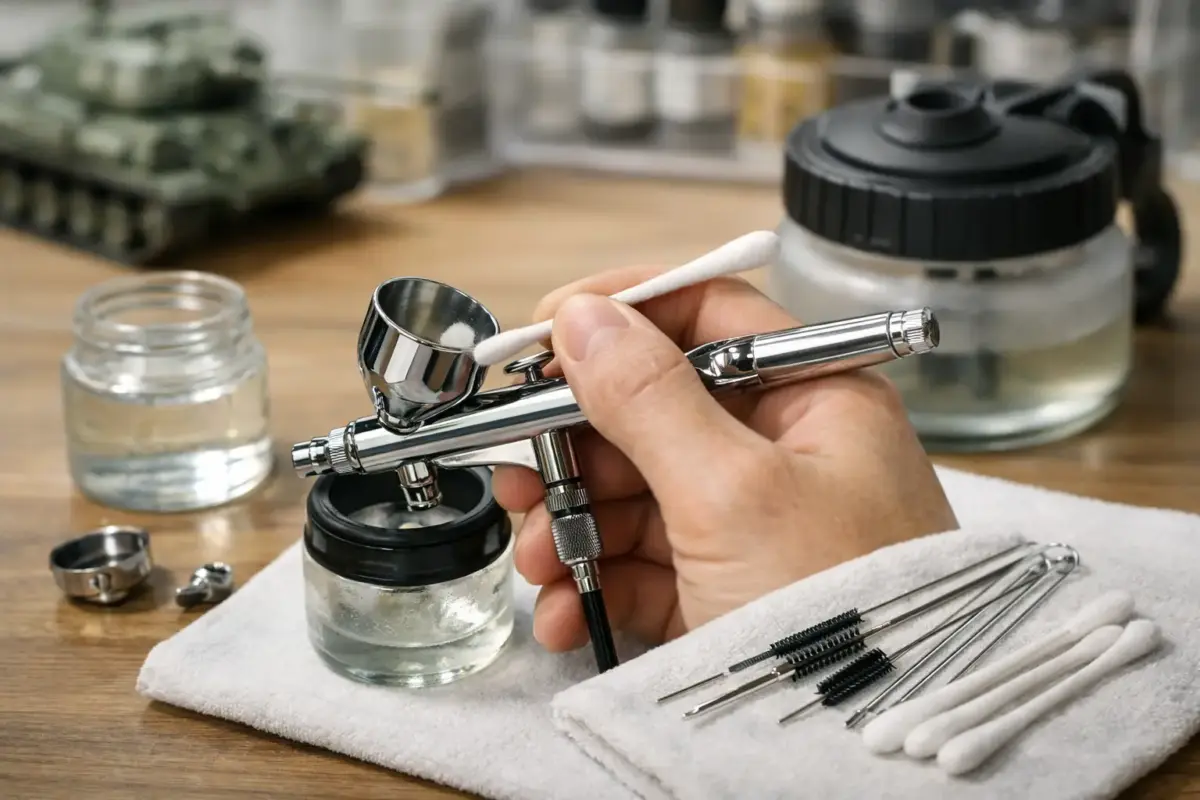
Nothing ruins a painting session faster than an airbrush that starts to spit, pulse or clog halfway through a coat of primer. In practice, most of those problems come back to one thing, which is why a solid airbrush cleaning guide matters so much. If you want consistent atomisation, predictable paint flow and fewer stripped-down rescue jobs at the bench, cleaning needs to be part of the painting routine rather than something saved for when performance drops.
Why an airbrush cleaning guide matters
For scale modellers, the airbrush is not just another tool. It is the step between careful assembly and a convincing finish, whether you are laying down a smooth RAF camouflage, mottling armour, pre-shading panel lines or spraying varnish on figures and wargaming pieces. A neglected airbrush does not usually fail all at once. It starts with minor issues – tip dry, a rough spray pattern, inconsistent trigger response, or paint building up where it should not.
That matters because many paint problems get blamed on thinning ratios or air pressure when the real culprit is residue left inside the brush. Dried acrylic in the nozzle, lacquer build-up around the needle, or old primer in the paint channel can all affect performance. Good cleaning protects the finish on your current project and extends the working life of the airbrush itself.
The three levels of airbrush cleaning
Most modellers benefit from thinking about cleaning in three stages rather than treating every session the same. There is the quick between-colour clean, the end-of-session clean, and the occasional deep clean. Using the right level at the right time saves effort and reduces unnecessary wear from constant full strip-downs.
A quick clean is enough when you are moving between similar paint types or adjacent shades. If you have just sprayed olive drab and are switching to a darker green, you usually do not need to dismantle the brush. An end-of-session clean is more thorough and should happen every time you finish painting. A deep clean is for when performance has clearly dropped, after heavy primer or varnish use, or when the airbrush has been left standing with paint inside.
Between-colour cleaning
Start by emptying the cup and wiping out as much leftover paint as possible with a lint-free cloth or cotton bud. Add a small amount of the correct cleaner, spray it through into a cleaning pot, then repeat until it comes through clear. For acrylics, this may be airbrush cleaner or the brand’s recommended thinner. For enamels and lacquers, use a compatible cleaner and make sure the seals in your airbrush can handle it.
Backflushing can help loosen paint from the paint path, but use it sensibly. Cover the nozzle cap carefully and allow air to bubble back into the cup for a moment, then spray out the loosened residue. It is effective, though too much force can push paint into places you would rather keep clean, especially on some trigger and air valve assemblies.
End-of-session cleaning
At the end of a session, a proper clean means more than spraying a cup of thinner through and calling it done. Remove the needle carefully, wiping it from back to tip with cleaner on a soft cloth. Be gentle – needles bend easily, and even a slight hook at the tip can affect spray quality.
Once the needle is out, clean the cup, nozzle area and exposed paint path. Depending on the design of your airbrush, you may also remove the nozzle for a more thorough wipe-down. This is where many blockages sit, particularly after primers, metallics and matt varnishes. Reassemble carefully, making sure the needle seats properly without being forced forward.
Deep cleaning when performance drops
A deep clean is not something to do after every colour cup, but it has its place. If the trigger feels sticky, the spray pattern remains uneven after normal cleaning, or the brush bubbles in the cup unexpectedly, internal residue may be the issue. Strip the front end methodically and lay the parts out in order. Clean each component with the appropriate cleaner, using airbrush cleaning brushes only where suitable.
Take care with the nozzle. On many modelling airbrushes it is the most delicate part, and overtightening or aggressive poking is a reliable way to turn a maintenance job into a replacement order. If paint has fully dried inside, a short soak may help, but avoid leaving parts in harsh solvents longer than necessary.
Matching the cleaner to the paint
This is where many avoidable problems start. Not all paint residues respond to the same cleaner, and using the wrong one can turn soft residue into a gummy mess that is harder to remove.
Acrylics
Water-based acrylics are common across scale modelling, but they are not all equally forgiving. Some clean up readily with dedicated acrylic thinner or cleaner, while others dry into a stubborn film, especially around the needle tip and inside the nozzle. If you spray acrylic primers or polyurethane-based products, expect to spend a bit more time on the end-of-session clean.
Plain water can help with initial flushing, but it is rarely enough on its own for a full clean. A proper airbrush cleaner will break down residue more effectively and leave less chance of hidden build-up.
Enamels
Enamels generally stay workable for longer during spraying, but they still leave residue behind. Use enamel thinner or cleaner suited to the paint brand. The main trade-off is that enamels often feel less prone to tip dry during use, yet they can leave oily deposits that need a thorough final wipe.
Lacquers
Lacquer paints spray beautifully when handled correctly, but they demand respect during cleaning. Use lacquer thinner or the manufacturer’s recommended cleaner, and make sure your workspace is properly ventilated. Lacquer residue can be less forgiving if allowed to dry inside the airbrush, so prompt cleaning pays off.
Common mistakes that cause most airbrush problems
The biggest mistake is leaving paint in the airbrush while you answer the phone, change masks or inspect a drying part. Paint starts curing quickly, especially in warm rooms or under bench lamps. Another common issue is assuming a flush-through is enough after spraying primers, metallics or varnishes. These products tend to cling more stubbornly than standard colour coats.
Using improvised tools is another risk. Cocktail sticks, sewing needles and hard wire might seem convenient, but they can score the nozzle or distort soft metal parts. Likewise, over-stripping the airbrush can create wear of its own. If the brush is spraying perfectly after an end-of-session clean, there is usually no need to dismantle every single component.
Poor reassembly also causes trouble. A nozzle that is not seated correctly, a needle inserted too forcefully, or a loose cap can all create symptoms that look like paint issues. If performance suddenly changes after cleaning, check the assembly before blaming the thinner ratio.
A practical routine for regular use
A reliable airbrush cleaning guide should leave you with a routine you can actually keep. For most hobby use, that means wiping the cup between colours, flushing with the correct cleaner, and doing a full needle-and-nozzle clean at the end of each session. If you have sprayed primer, metallics, varnish or heavier pigments, give the front end extra attention before putting the airbrush away.
It also helps to keep the right consumables at the bench. Cleaner, thinner, lint-free cloths, cotton buds, micro brushes and a cleaning pot all make the process quicker. If cleaning feels awkward, it tends to get delayed, and delayed cleaning is usually what turns a simple maintenance job into a blocked airbrush.
For modellers working across multiple paint systems, staying organised matters. Keep acrylic, enamel and lacquer cleaners clearly separate and do not mix residues casually in the cup. That small bit of bench discipline saves a lot of troubleshooting later.
When parts need replacing rather than cleaning
Not every airbrush issue can be fixed with more cleaner. A bent needle, cracked nozzle, damaged seal or worn nozzle cap can all mimic a blockage. If you have cleaned thoroughly and the brush still sputters, sprays off-centre or leaks air, inspect the parts closely.
This is especially relevant if the airbrush has been dropped or if the nozzle has been overtightened in the past. In a specialist hobby setup, having access to compatible spares is just as important as having the right paint and thinner. Shops such as Scale Model Shop are useful here because modellers often need brand-specific accessories, not generic substitutes.
Airbrush cleaning guide habits worth keeping
The best cleaning method is the one that fits the way you actually build and paint. If you spray short sessions in the evening, a disciplined end-of-session clean matters more than an elaborate monthly overhaul. If you use lacquer primers and varnishes every weekend, deeper maintenance will need to happen more often. It depends on your paint system, your airbrush design and how heavily you use it.
What does not really vary is the principle behind it. Clean promptly, use the right solvent, handle the needle and nozzle with care, and do not wait for obvious faults before maintaining the brush. A well-kept airbrush is easier to trust, and that confidence shows up in every coat you put on a model.
