
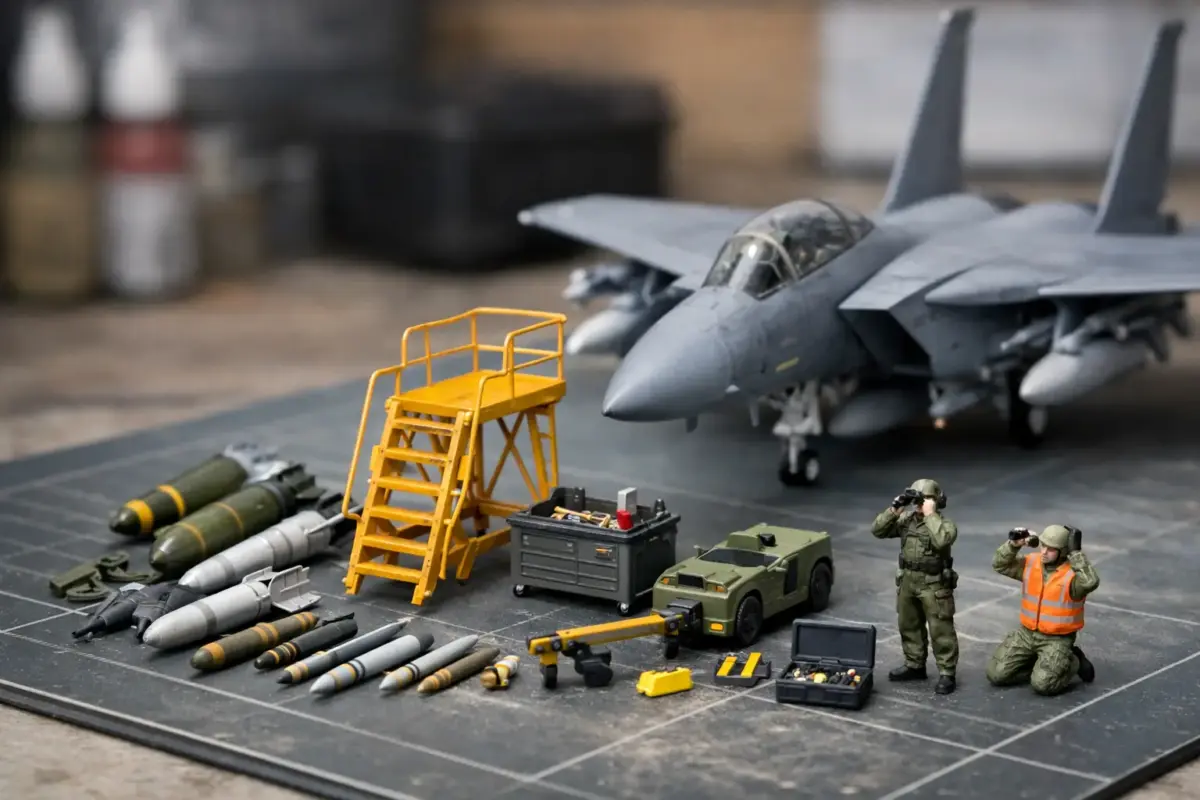
A decent 1/72 aircraft kit can look excellent straight from the box, but the right 1 72 aircraft accessories are what turn a tidy build into something that feels convincing on the shelf. In this scale, small upgrades make a bigger difference than many modellers expect. A sharper seat, cleaner canopy framing, better stencils or more realistic stores can lift the whole project without making it overly complex.
That matters because 1/72 sits in a sweet spot for aircraft modelling. It offers a broad choice of subjects, sensible display space and enough detail to reward careful finishing. At the same time, it is less forgiving of heavy-handed additions. The best accessories are not always the most elaborate ones. They are the ones that suit the kit, the subject and the way you like to build.
Choosing 1 72 aircraft accessories for the kit you have
The first question is not what looks impressive in the packet. It is what your base kit actually needs. Some newer-tool aircraft kits already include respectable cockpit detail, fine panel lines and sensible ordnance. In those cases, a full resin replacement set may be unnecessary, while masks, decals and a few external details can offer better value.
Older kits are different. A classic tool might have a basic cockpit tub, thick undercarriage doors, soft wheels and sparse weapons. That is where aftermarket can transform the result. Even then, it is worth being selective. In 1/72, overloading a build with every available upgrade can create fit problems and slow the project to a halt.
It also depends on your end goal. If you are building for a relaxed weekend project, simple improvements are often enough. If you are aiming for a competition standard finish or a historically precise aircraft from a particular squadron and period, the accessory list becomes more focused and more technical.
The accessories that make the biggest visual difference
For most 1/72 aircraft builds, cockpit enhancements are usually the first place to look. Even with a closed canopy, a better seat, sharper instrument panels or etched harnesses can improve the sense of scale. On aircraft with prominent glazing, such as bombers, trainers and some helicopters, interior upgrades become even more worthwhile. Resin can offer excellent detail, but photo-etch often works well when space is tight and the kit tolerances are narrow.
Canopy masks are one of the most practical upgrades you can buy. They save time, improve consistency and help keep framing sharp, especially on multi-panel canopies where hand-masking can become tedious. For RAF, Luftwaffe and modern jet subjects alike, a pre-cut mask set often gives a cleaner result than trying to trim every pane yourself.
Decals are another high-impact area. Many kit decals are perfectly usable, but aftermarket sheets often provide finer printing, better register and more complete stencil data. They also open up marking options that the base kit does not include. If you are modelling a specific airframe, anniversary scheme or theatre variant, decals may be the single most important accessory in the build.
Wheels, exhausts and pitot tubes are smaller parts, yet they can sharpen the finish noticeably. Weighted resin wheels can improve stance, replacement exhausts can add depth where kit parts are hollowed poorly or not at all, and fine metal probes are less vulnerable than fragile plastic parts. These upgrades are subtle, but on a finished 1/72 model they help the eye read the aircraft as more refined.
1 72 aircraft accessories for realism, not just detail
More detail does not automatically mean more realism. In 1/72, scale effect matters. Very thick etched parts can sometimes look flatter than a well-painted plastic original, while a heavily detailed resin cockpit may disappear once the fuselage is closed. That is why experienced modellers often spend more on finishing materials than on internal upgrades.
A realistic paint finish, properly scaled weathering and accurate stores usually do more for the final impression than hidden detail. Fine surface primers, good acrylic or lacquer paints, reliable clear coats and weathering products suited to aircraft finishes are all part of the accessory conversation. They may not be marketed in the same way as resin cockpits, but they are every bit as important.
Panel line washes need restraint in this scale. What looks dramatic on the bench can look oversized once the model is viewed at normal distance. The same goes for chipping and staining. Accessories that support control and finesse, such as quality brushes, masking products, fine sanding materials and airbrush consumables, often improve results more than one extra fret of photo-etch.
Stores, armament and external upgrades
Aircraft rarely look complete without the right external loadout. One of the most useful categories in 1/72 aircraft accessories is replacement or supplementary ordnance. Many kits provide simplified bombs, missiles, pods or drop tanks, and some give a generic set that does not quite match the marking option in the box.
Aftermarket weapons sets let you build the aircraft for a specific role and era, whether that is a clean interceptor fit, a ground-attack configuration or a late-service mixed load. Accuracy matters here. Pylons, rails and stores combinations vary from one aircraft and operator to another, so it pays to check references before buying every missile set that catches your eye.
External detail sets can also include replacement undercarriage bays, airbrakes, control surfaces and folded wing components. These can look excellent, but they are best chosen with some caution. Major resin surgery on a small 1/72 airframe is not always relaxing, and some kits simply are not designed to accept large replacement parts without a fair amount of adjustment.
What beginners should buy first
If you are newer to aircraft modelling, start with accessories that reduce frustration rather than increase complexity. Masks, better decals, a good primer and a dependable set of paints matched to the subject are sensible first upgrades. Add a quality sanding sponge, a fine filler and a clear coat that behaves well with decals and washes, and you will cover most of the practical weak points in a typical build.
After that, consider seat belts or a simple cockpit set for aircraft with visible interiors. Resin wheels are another straightforward improvement. These are the sorts of additions that teach useful techniques without forcing you into difficult surgery on every build.
It is often wiser to build one neat, well-finished 1/72 aircraft with a handful of carefully chosen extras than to bury a project under advanced aftermarket and lose momentum. The hobby should still feel enjoyable.
What experienced modellers tend to prioritise
More advanced builders usually shop by workflow. They know whether a project needs correction parts, finer armament, specific decals or specialist finishing products before they even open the box. That approach keeps spending targeted and avoids the common trap of buying accessories that never get used.
Brand compatibility can matter as well. Paint systems, thinners, varnishes and weathering products do not all behave the same way, especially when mixing acrylics, enamels and lacquers. The same applies to adhesives for resin, metal and clear parts. When you can source the kit, upgrades, paints and tools in one order, it becomes much easier to keep the project coherent from assembly through final finish. That is one reason many modellers prefer a specialist retailer such as Scale Model Shop rather than piecing purchases together from multiple places.
Avoiding common mistakes with 1 72 aircraft accessories
The most common mistake is buying for ambition rather than for the actual kit. A beautifully cast cockpit set is not much use if it requires major thinning, removes structural strength or disappears under a closed canopy. Likewise, a full stencil sheet may be unnecessary on a quick weekend build where the goal is simply an attractive squadron line-up.
Another issue is scale thickness. Antennae, gun barrels and probes can all benefit from replacement parts, but only if they remain in proportion. In 1/72, fine detail is everything. If an accessory looks oversized before paint, it will look even heavier once finished.
Finally, think about sequence. Some upgrades need to be planned before assembly starts, while others can be added later. Masks, decals and external stores are easy to factor in at the beginning. Resin bays, etched cockpit parts and replacement control surfaces usually demand dry-fitting from the first stages of the build.
The best accessory choices are the ones that support the model you actually want to finish. Pick the upgrades that improve accuracy, save time or sharpen the final appearance, and leave the rest for another project. A well-chosen handful of 1/72 aircraft accessories will nearly always beat a box full of parts you did not need in the first place.
