
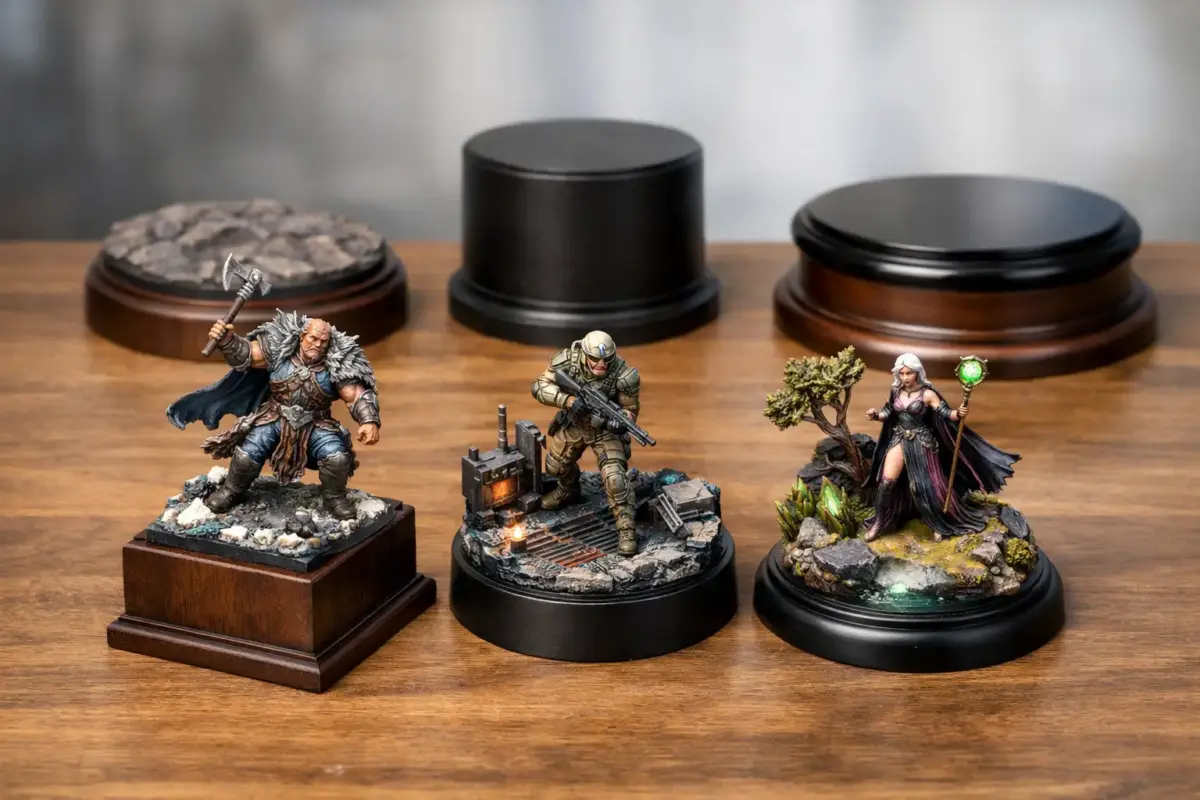
A well-painted miniature can lose impact the moment it is placed on the wrong base. Too small, and it looks cramped. Too large, and the figure seems to float. When modellers ask about the best display bases for miniatures, they are usually trying to solve three things at once – presentation, stability and context.
The right base does more than hold a figure upright. It frames the subject, supports the story you want to tell, and gives your paintwork a proper finish. For competition pieces, cabinet models and gaming miniatures alike, the base is part of the build, not an afterthought.
What makes the best display bases for miniatures?
The answer depends on what you are displaying and how you want it viewed. A single 75mm figure meant for a display cabinet has different needs from a squad leader for tabletop use, and both are different again from a bust or a small scenic vignette.
In practical terms, the best bases balance four factors. They need the right footprint for the miniature, enough visual weight to feel intentional, a surface that suits the subject, and a material that is easy to work with. If one of those is off, the finished piece can feel mismatched even when the painting itself is strong.
Material matters more than many hobbyists expect. MDF and resin scenic bases are convenient and widely used. Turned wooden plinths bring a more formal display look. Plastic slotta-style bases remain sensible for gaming and wargaming projects because they are durable, consistent and easy to batch. None is automatically better than the others. The right choice comes down to the model and the result you want.
Wooden plinths for figure display
If the aim is a cabinet-ready finish, wooden plinths are often the strongest option. They give a miniature a clean visual separation from the shelf and make the piece feel complete. For busts, larger scale figures and competition entries, that extra presence can make a real difference.
A good plinth also allows you to build upward rather than outward. Instead of spreading groundwork across a wide gaming base, you can keep the footprint compact and raise the figure slightly, which often improves how the model reads at eye level. This is particularly useful for historical figures, fantasy heroes and mecha subjects with a strong vertical silhouette.
There is a trade-off. Wooden plinths usually need a little more planning. Pinning becomes more important, and the transition between plinth top and scenic groundwork needs a tidy finish. If the groundwork spills over untidily or the top surface is not level, the premium look is lost.
For many display painters, the best approach is a simple stained or satin-finished plinth with restrained groundwork above it. The base should support the miniature, not compete with it.
Resin scenic bases when context matters
Resin display bases are popular because they solve the groundwork question quickly. Cobblestones, industrial decking, rubble, trench sections, temple floors and cracked earth can all be added with a level of sculpted detail that would take much longer to scratch-build.
They are especially useful for fantasy miniatures, wargaming characters and single-figure displays where the environment is part of the appeal. If your miniature is posed dynamically, a scenic resin base can help anchor that movement. A leaping figure makes more sense landing on broken masonry than on a plain disc.
The caution here is compatibility. Scenic detail needs to fit the miniature’s scale and tone. A heavily textured base can overpower a small figure, while oversized bricks or skulls can break realism instantly. This matters just as much for military figures as it does for fantasy and science fiction subjects. Texture should read correctly against boots, weapons and surrounding accessories.
Resin also needs proper preparation. Wash it before priming, check for warping, and test-fit carefully. Most issues are straightforward to fix, but rushing this stage can create avoidable gaps or adhesion problems later.
Plain round and square bases for gaming miniatures
Not every miniature needs a scenic plinth. For many projects, plain round or square bases remain the most practical choice. They are the standard for tabletop forces, rank-and-file figures and builds where consistency across a unit matters more than individual presentation.
The strength of a plain base is flexibility. You can finish it with texture paste, ballast, static grass, fine sand, cork, pigment work or snow effects to match the rest of an army or collection. That gives you control without locking you into a sculpted pattern.
Round bases tend to suit skirmish games and modern character displays, while square bases remain common in older systems and regimented fantasy formations. Neither is inherently better aesthetically. It is more about the visual language of the project and whether the base shape supports the intended use.
If you are building multiple miniatures, plain bases also make batch work far easier. You can prime, texture and paint them together, keeping a coherent finish across the whole set.
Oval and elongated bases for movement and balance
Some miniatures simply need more room. Cavalry, large creatures, artillery teams and running poses can look awkward on compact round bases. In these cases, oval or elongated display bases are often the better choice.
They give the model breathing space and let you place groundwork in a way that reinforces motion. A horse and rider, for example, usually benefit from a longer footprint that follows the direction of travel. The same applies to tanks in small scenic presentations, walkers, and larger fantasy pieces with extended limbs or weapons.
This is one of those areas where scale judgement matters. Too much spare space leaves you with dead ground that adds little to the composition. Too little, and the model feels squeezed. A useful rule is to leave enough room for groundwork to frame the miniature, but not so much that the eye wanders away from the main subject.
How to match the base to the miniature
A display base should look like it belongs to the model. Historical figures generally benefit from more restrained groundwork and believable terrain. Fantasy and science fiction subjects can support stronger texture, more dramatic elevation and bolder scenic elements. Busts often look best on cleaner plinths because the sculpt carries the visual weight on its own.
Scale is equally important. Fine rubble that works for 1:35 or 54mm may look oversized on a smaller gaming figure. Railway scenic materials, modelling sand, cork sheet and texture pastes can all be very effective, but only when chosen with the miniature’s scale in mind.
It also helps to think about viewing angle. A gaming miniature is usually seen from above and at arm’s length. A competition figure or cabinet bust is often viewed at eye level and from much closer. That changes how much detail the base needs and where that detail should be concentrated.
Surface finish, edging and presentation
One of the easiest ways to improve a base is to pay attention to the edge. Even an excellent paint job can look unfinished if the rim is messy, chalky or splashed with texture. Clean black, dark brown or a natural wood finish usually gives the most dependable result.
Matte versus satin is another small choice that has a bigger effect than expected. Scenic groundwork usually benefits from a matte finish, while a wooden plinth can look better with a gentle satin sheen. Very glossy finishes tend to distract unless they are being used deliberately on water, slime or polished flooring effects.
For display work, neat transitions matter. If you are mounting groundwork on top of a plinth, keep the edges crisp and avoid visible glue squeeze-out. If you are using a gaming base, ensure the rim is consistently painted after all weathering and pigments are finished.
Choosing the best display bases for miniatures by project type
For single display figures, wooden plinths and quality resin scenic bases are usually the strongest choices. For army projects, plain plastic or MDF bases are often more practical because they are economical, durable and easy to standardise. For busts, a clean plinth nearly always works better than an overly busy scenic base.
For historical subjects, understated terrain often gives the most convincing result. For fantasy and science fiction, more dramatic elevation and scenic storytelling can work well, but restraint still helps. A base should support the miniature’s character, not become a separate project fighting for attention.
This is where a specialist range helps. Being able to compare sizes, materials and scenic styles in one place saves time and reduces the risk of ordering something that does not suit the subject. For modellers working across figures, armour, Gundam and wargaming projects, that flexibility matters.
A good base does not need to be complicated or expensive. It just needs to look intentional. If you choose one that suits the miniature’s scale, weight and setting, the whole piece immediately feels more finished. When you are deciding between options, start with the model in front of you and ask a simple question: does this base help the miniature look its best, or is it asking the eye to look somewhere else?
