
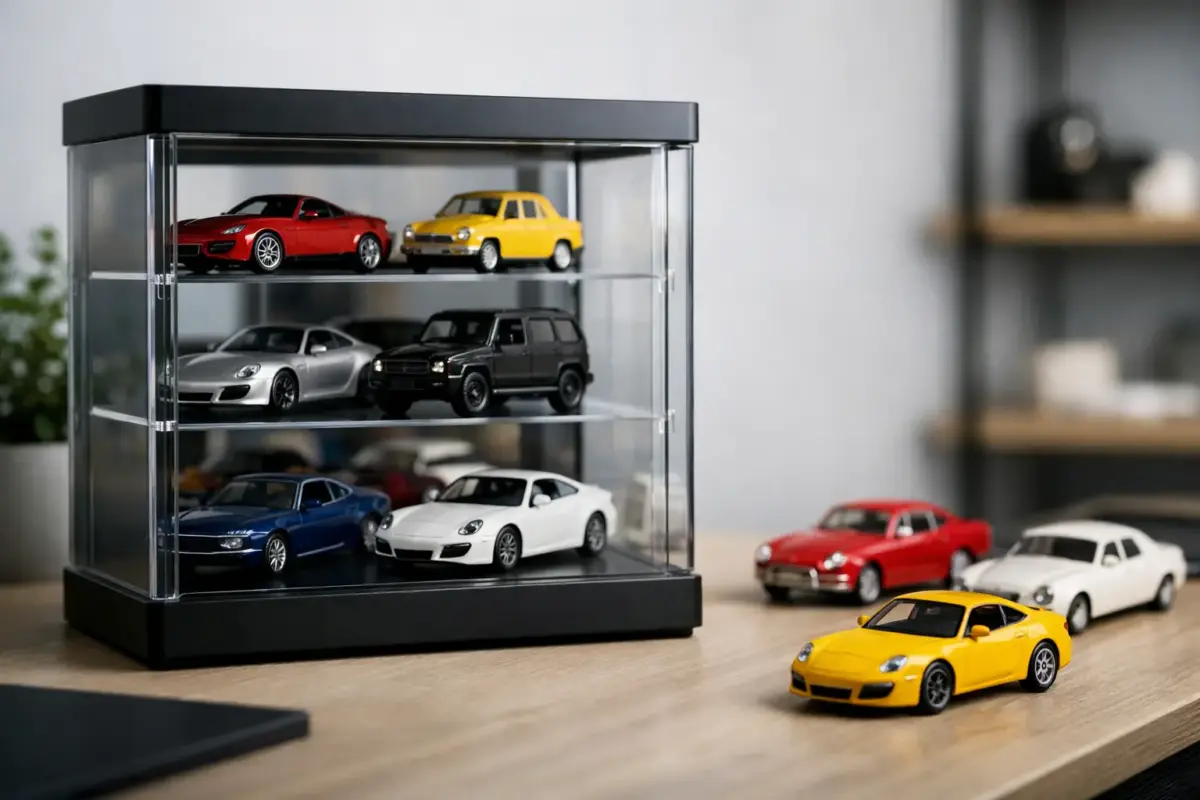
A good diecast model display case does two jobs at once. It protects the model you have paid for and made space for, and it helps the piece read properly on the shelf. A well-finished 1:18 road car, a rally legend in 1:43, or a line of motorsport miniatures all look different once dust, glare, cramped spacing, or a flimsy base start getting in the way.
For most collectors, the question is not whether a case is worth having. It is which type makes sense for the models you actually own. Size, material, access, visibility and where the case will sit all matter more than many buyers expect, especially once the collection starts growing.
What makes a good diecast model display case?
The right case begins with protection, but protection alone is not enough. If the acrylic distorts the view, the base is too narrow, or the model is awkward to place inside, the case becomes a compromise rather than an upgrade.
A good display case should keep dust off fine surface detail, reduce the risk of accidental handling damage, and give the model enough visual breathing room. Mirrors, printed backdrops and lighting can all be useful, but they are secondary. First, the case needs to fit the model properly and present it cleanly.
Material choice is usually the first trade-off. Acrylic is popular because it is light, clear and generally more practical for regular collecting. Glass often feels more premium and can resist fine scratching better, but it is heavier and less forgiving if you need to move or rearrange a display cabinet. For individual cases, many collectors find acrylic the better day-to-day option. For permanent furniture-style displays, glass can make more sense.
Match the case to the scale
Scale should drive the buying decision. A case that suits a 1:64 diecast will be completely wrong for a 1:18 saloon or a wide-bodied racing car with mirrors, splitters and rear wing elements that push beyond the basic footprint.
For smaller scales such as 1:64 and 1:76, compact individual boxes or stacked cabinet systems work well because the models do not need much internal height. The challenge here is often quantity rather than dimensions. If you collect in volume, consistency matters. Uniform case sizes make a collection look organised instead of improvised.
For 1:43, you have a little more flexibility. Many collectors prefer cases with a proper plinth or base, as this gives the model a more finished presentation and makes spacing less awkward. This scale is small enough for denser displays but detailed enough that dust quickly becomes noticeable on glazing, wheel arches and interior trim.
For 1:24 and 1:18, dimensions need more care. Length and width are obvious, but height is easy to overlook. Roof aerials, mirrors and raised doors on some display pieces can create fit issues. Always allow extra internal clearance rather than choosing a case that only just works. Tight cases tend to make placement fiddly, which increases the chance of broken details.
Individual cases or a larger cabinet?
This depends on how you collect. If you buy occasional centrepiece models, individual cases are often the cleanest solution. They are easy to place on a desk, shelf or bookcase, and they let each model stand on its own merits.
If you collect by theme – Le Mans winners, Group B rally cars, classic British saloons, modern Formula 1, or a manufacturer lineage – a larger cabinet may be more practical. It can also make the collection easier to enjoy at a glance. The trade-off is exposure during access. Every time cabinet doors open, dust and handling risk come back into the picture, even if only briefly.
There is also a middle ground. Some collectors use individual cases for premium or fragile pieces and a cabinet for more standard models. That approach works particularly well if certain diecasts have delicate trim, photo-etched parts or display bases you do not want to keep moving.
Diecast model display case features worth paying for
Not every extra feature adds real value. Some improve presentation immediately, while others are only worthwhile in specific setups.
A solid base is usually worth having. It makes the case feel less temporary and can help when lifting or relocating the model. Black, white and wood-effect finishes are common. Black tends to suit motorsport, modern road cars and more technical displays. Wood-effect bases can work nicely with classic vehicles, though they are more dependent on the room and surrounding furniture.
A secure cover matters too. Loose-fitting tops are one of the main weak points in cheaper cases. If the fit is poor, dust will still find its way inside, and the case may shift when picked up. For collectors who move models around for photography, reorganising or seasonal room changes, build quality is worth paying attention to.
UV protection can be useful, though its value depends on where the collection lives. If your display area gets strong natural light, particularly near a window, some level of UV resistance is sensible. It will not make a model invulnerable to fading, but it can help reduce long-term damage to paint, decals and interior materials.
Integrated lighting looks impressive, but it is not always essential. In a dedicated cabinet or hobby room, lighting can add depth and bring out paint finish and panel detail. In a normal domestic setting, it may create reflections that make viewing worse rather than better. It depends on room lighting, shelf height and viewing angle.
Placement matters more than the case itself
Even a very good diecast model display case will underperform if it is placed badly. Direct sunlight is the obvious problem, but heat sources, damp conditions and unstable shelving can be just as damaging over time.
Try to keep display cases away from radiators, conservatories and shelves that vibrate when doors close or people walk past. Repeated minor movement may not seem serious, but it can unsettle mirrors, spoilers or loosely mounted components on more delicate pieces. If the shelf bows under weight, that is another warning sign, especially with larger scales or glass units.
Eye level is usually best for premium models. Lower shelves tend to collect more dust in the surrounding area and can make roof detail harder to appreciate. Higher shelves are safer from knocks, but you lose some of the finer visual interest unless the case is angled or the room layout brings the model closer to view.
How collectors often get it wrong
The most common mistake is buying to the model’s nominal scale and not its actual dimensions. Diecast manufacturers vary, and some models sit on chunky plinths or have wider bodywork than expected. Measuring first saves frustration.
The second mistake is overfilling a display area. Collectors understandably want to make the most of shelf space, but crowded models rarely look their best. Distinctive paint schemes, sponsor markings, stance and body lines all need space to read properly. A slightly less dense display often looks more serious and better cared for.
The third is treating all rooms as equal. A tidy spare room, office or dedicated hobby space is very different from a busy lounge, hallway or windowsill. Dust levels, temperature changes and accidental contact vary a lot from one environment to another. The right display solution in one room may be the wrong one elsewhere.
Choosing with future growth in mind
Most collections do not stay the same size for long. If you already know your interests are narrowing into a particular marque, era or racing category, it makes sense to think beyond the next purchase. A display system that can be expanded or standardised usually ages better than a random mix of one-off cases.
That does not mean every collector needs a large cabinet from the start. It means planning for consistency where possible. Matching base finishes, compatible outer dimensions and sensible shelf spacing all make expansion easier later on.
At Scale Model Shop, we know hobby purchases tend to build into projects and collections rather than isolated buys. Display is part of that same process. Once a model is finished, detailed or collected, it deserves protection that suits its scale and the way you want to present it.
If you choose carefully, a display case will do more than keep dust off. It will make you look at the model more often, notice more of the detail you paid for, and give the collection the proper sense of order that every serious display needs.
