
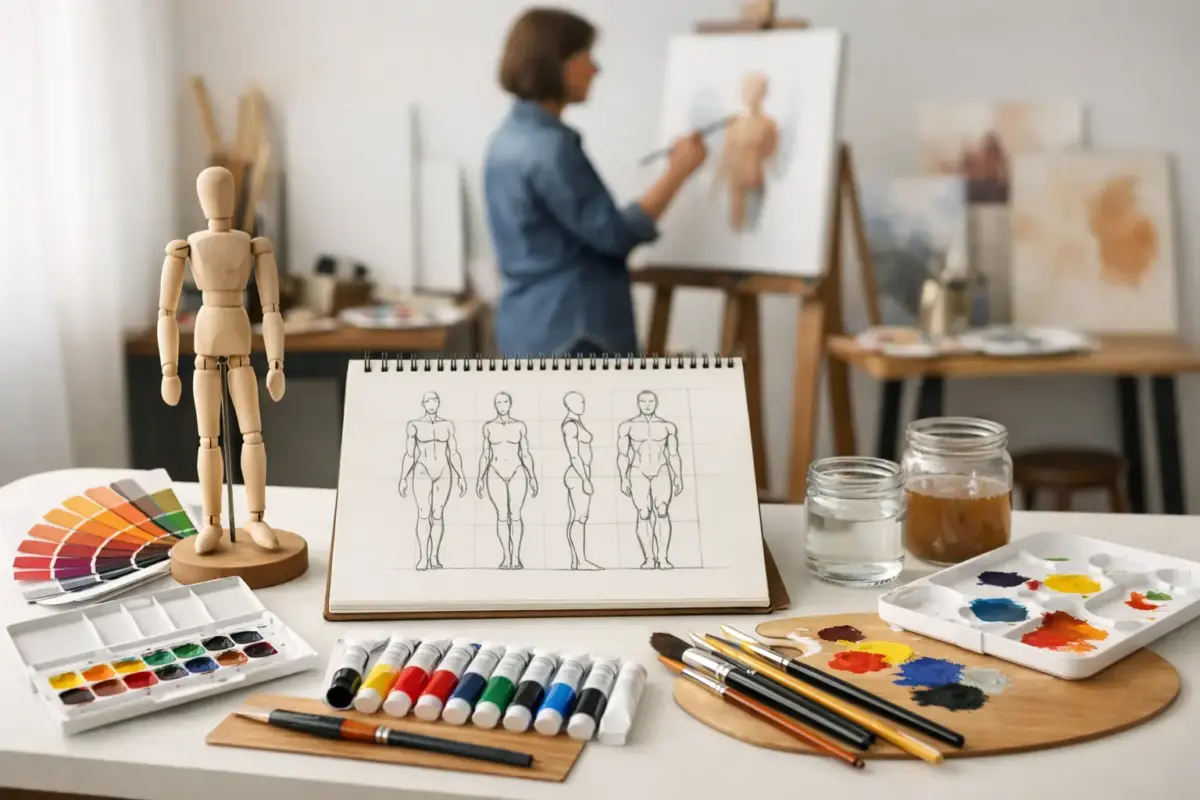
A disappointing first figure usually comes down to the same issue: not lack of skill, but the wrong kit on the bench. If your figure painting starter set gives you a few random paints and a poor brush, the hobby feels harder than it should. Start with the right core materials, though, and even a basic 28mm infantryman or larger resin bust becomes far more enjoyable to paint.
For beginners, the real aim is not buying the biggest bundle. It is building a set that covers preparation, base coating, shading and finishing without leaving obvious gaps. That matters whether you paint historical figures, fantasy miniatures, resin characters or military crew for a diorama. A sensible starter set should help you complete a model from bare plastic or resin to a display-ready result, not just get a few colours onto it.
What a figure painting starter set should include
The best figure painting starter set balances convenience with quality. Paint is the obvious starting point, but figures are small, detail-heavy subjects, so brush control, surface preparation and paint behaviour matter just as much as the colours themselves.
At minimum, you want a primer, a compact range of acrylic paints, one or two reliable brushes, and something to help with washes or shading. A flesh tone, black, white, metallic, brown, green, blue and a red will cover a surprising number of projects. If you are painting historical subjects, adding khaki, olive drab and leather shades makes life easier. For fantasy or sci-fi figures, stronger spot colours may be more useful than strict uniform tones.
A starter set also needs to make sense as a system. Some ranges are designed around brush painting, with strong opacity and smooth coverage. Others are excellent products, but better suited to modellers who already understand thinning ratios and layering. That distinction matters. Beginners generally benefit from paints that brush on cleanly straight from the bottle or with only light thinning.
Start with the surface, not the paint rack
It is tempting to focus entirely on colour selection, but the figure itself needs prep first. Mould lines across a face, helmet or folded sleeve will still show through careful painting. For that reason, a practical starter set either includes or sits alongside a few essential preparation tools.
A modelling knife, fine sanding sticks and sprue cutters will handle most plastic figure work. Resin figures often need a little more cleaning and test fitting, particularly around joins and casting blocks. Washing resin parts before priming is worth doing, as mould release can affect paint adhesion. If you skip this stage, even good paints can bead or lift in awkward places.
Primer is where the whole finish starts to behave properly. For figures, a fine primer is usually better than a heavy general-purpose one, because it preserves facial features, straps, webbing and other delicate detail. Grey is the safest all-round choice. White can brighten vivid colours, while black can help if you want deeper shadows from the outset. There is no single correct answer here. It depends on the subject and how you like to paint.
Paint types and why beginners should keep it simple
Most figure painters begin with water-based acrylics, and for good reason. They dry quickly, clean up easily and suit both small gaming figures and larger scale display pieces. A good acrylic range gives you enough control to base coat, layer and glaze without needing a complicated setup.
Enamels and oils have their place, especially for blending flesh tones, uniforms and weathered fabrics, but they are rarely the best starting point for a first set. They demand more familiarity with drying times, thinners and surface control. Many experienced modellers use them to excellent effect, but for a first purchase, acrylics are usually the sensible route.
This is where brand quality becomes noticeable. Better hobby paints tend to have finer pigment, more predictable finish and stronger consistency between colours. Cheap craft paints can seem attractive at first, but on small figures they often struggle with opacity and leave texture where you least want it. A dependable starter set saves frustration because it behaves as expected.
Brushes matter more than most beginners expect
A figure painter does not need ten brushes to start well. Two or three good ones will do more than a large mixed pack of poor-quality tips. For most beginners, a size 1 or 2 for general painting and a finer brush for smaller details is enough. A slightly larger brush with a good point often paints figures better than an ultra-tiny detail brush, because it holds more paint and dries less quickly on the bristles.
Synthetic brushes are practical for beginners and perfectly capable of strong results. Kolinsky sable remains popular for fine control, but it is an investment and does need proper care. If you are just getting started, it is often wiser to learn brush loading, paint thinning and tip control with decent synthetics before moving to premium natural hair brushes.
Brush care should be treated as part of the starter set, not an afterthought. Paint drying in the ferrule ruins points quickly. Regular rinsing, avoiding paint overload and using brush soap will make a noticeable difference. One good brush kept clean is more useful than three neglected ones.
Building a sensible colour range
A good figure painting starter set should not try to cover every subject in one box. That usually leads to too many niche shades and not enough of the true essentials. It is better to begin with a compact palette that mixes well and suits the sort of figures you actually build.
For military and historical figures, focus on flesh tones, blacks, whites, browns, greens, khakis, greys and a metallic or two. For fantasy miniatures, keep the core neutrals but add stronger accent colours. For busts and larger scale figures, a few extra flesh shadows and highlights are worth having because skin becomes a bigger visual feature.
Pre-matched paint sets can be useful here, especially for beginners who want compatibility across tones. The trade-off is flexibility. A boxed set may include colours you will barely touch, while leaving out a shade that suits your preferred subject. Buying a smaller starter set and adding one or two task-specific paints often works better than relying on one all-in bundle.
Washes, highlights and the first step beyond flat colour
Flat base coats make a figure readable, but washes and highlights give it shape. This is often the point where beginners see the biggest improvement for the least extra effort. A dark wash in recesses can define straps, folds and facial detail almost immediately. A lighter tone on raised areas then restores contrast and makes the miniature look finished rather than merely painted.
That does not mean every figure needs heavy shading. On some scales, especially larger display figures, an aggressive wash can leave the finish dirty or tide-marked. For gaming miniatures and quick army painting, washes are efficient. For a carefully painted bust, controlled layering may give a cleaner result. Again, it depends on the subject, scale and finish you want.
If your starter set includes a wash or two, that is useful. If not, a dark brown and a dark neutral wash will cover a lot of ground. Brown is often more forgiving than black, especially on skin, leather and earth-toned uniforms.
Useful extras that genuinely earn their place
Some accessories are easy to dismiss until you use them. A wet palette helps acrylics stay workable longer and improves consistency during layering. For figure work, that extra control is genuinely helpful. It also reduces waste, which matters if you are using higher-quality hobby paints.
A palette, water pot, mixing surface and good lighting are basic but important. Poor light leads to poor decisions on contrast and colour balance. If you can clearly see what the brush is doing, you will improve faster. Magnification can also help, particularly for older modellers or anyone working regularly on 1/35 crew, 54mm figures or small wargaming faces.
Varnish is another worthwhile addition. A matt varnish can unify the finish and remove unwanted sheen from washes or handling. Satin and gloss have their place too, but matt is usually the safest starting point for figures unless you are aiming for polished armour, wet effects or specific material contrast.
Choosing the right starter set for your subject
Not every figure painting starter set suits every modeller. A wargamer painting squads in volume needs speed, repeatability and durable acrylics. A scale modeller finishing a tank commander for a 1/35 vehicle may need a smaller selection of military tones and more emphasis on realism. Someone painting resin busts may prioritise flesh sets, finer brushes and advanced layering colours.
That is why browsing by task and subject is often more useful than buying the first generic set you see. At Scale Model Shop, many modellers approach figure painting from adjacent hobbies such as armour, aircraft or diorama work, so it makes sense to choose products that fit into a wider bench setup rather than treating figures as a separate world.
The strongest starter set is the one you will actually use from first primer coat to final varnish. It should remove friction, not add decisions.
If you are starting from scratch, keep it focused. Buy a set with dependable acrylics, proper primer, a couple of quality brushes and enough supporting tools to prep and finish the figure well. You do not need everything at once. You just need the right first set to make the next figure better than the last.
