
ICM Plastic Model Kit
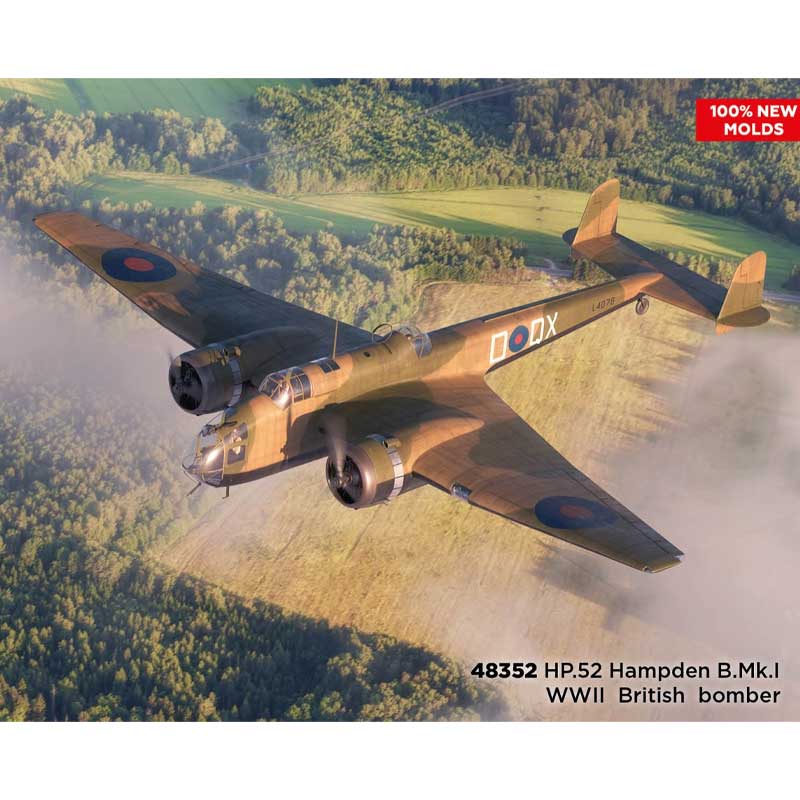
ICM HP.52 Hampden B.Mk.I WW II British Bomber (1/48)
There is something quietly impressive about the Hampden’s story, maybe because it arrived at that strange moment between eras, when Britain was still shaking off its old biplanes and feeling its way into modern warfare. This kit captures that transition well. The airframe feels lean, almost too narrow in places, yet the detail ICM have pushed into the cockpit and internal structures makes it feel more alive the longer you look at it. The panelling and rivet work follow the real aircraft’s lines with a kind of restrained confidence, nothing exaggerated, just accurate and sharp.
The kit comes with a solid selection of bomb loads, both internal and under-wing, which adds a bit of freedom in how you want the finished build to feel. Four marking options cover early service machines, including the first production aircraft and several operational bombers from Waddington. The parts count sits around 350, so there is enough to get your teeth into without it turning into one of those builds that drags on forever. The sprue layout is tidy and the moulding quality is consistent, which helps more than it probably should.
- 1/48 scale model with approximately 350 parts
- Fine rivet and panel surface detail across fuselage, wings, and tail
- Accurately rendered cockpit and interior sections
- Optional bomb configurations for bay and pylons
- Decals for four historically significant aircraft
- 341 mm in length and 442 mm wingspan
- Includes clear assembly instructions and high-quality moulded components
History can sometimes feel distant until you follow an aircraft like the Hampden through its early years. Designed under Specification B.9/32, it first flew in 1936 and surprised everyone with its speed for a machine of its shape. By 1938 it was entering service, and by the summer of 1940 more than 500 were in the air, with English Electric adding hundreds more. It worked hard in the opening phase of the war, flying ground attacks, raids into Germany, mine-laying, and later switching into torpedo operations. By 1942 it was stepping out of the bomber role and into Coastal Command, closing a chapter that helped shape Britain’s early wartime strategy in a way that is easy to overlook now but mattered a great deal then.