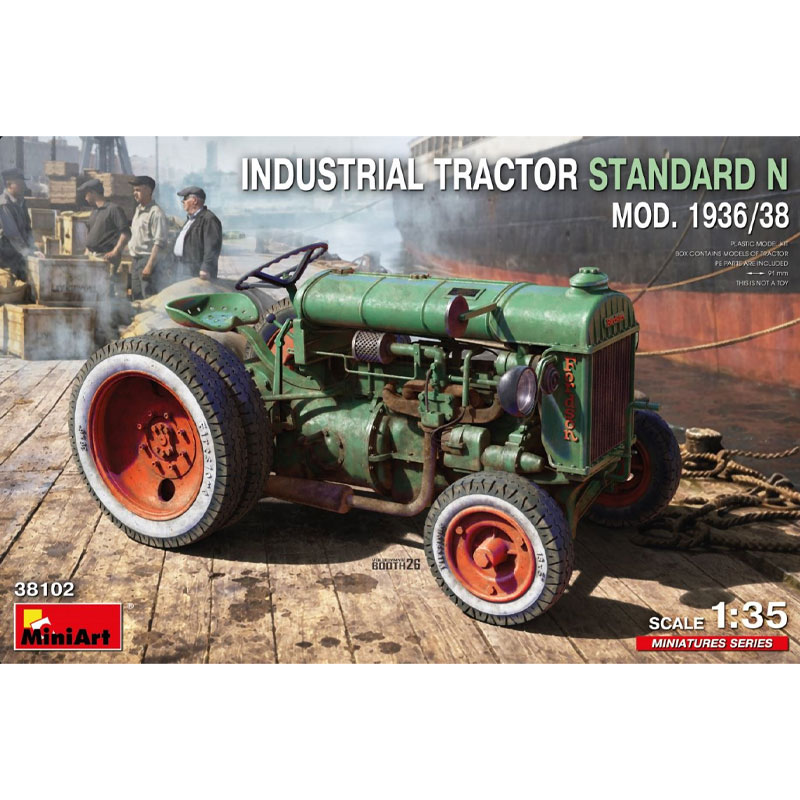


MiniArt Plastic Model Kit
Industrial Tractor Standard N Mod. 1936/38
This 1/35 scale kit from MiniArt represents the industrial version of the Standard N tractor produced between 1936 and 1938. Designed for use in civilian environments such as factories, construction sites, and ports, this vehicle offers a distinctive subject for modellers interested in non-military or early-war scenes.
Part of the 1/35 vehicle model kits range, the kit provides a detailed representation of the tractor, including structural and mechanical elements. It is suitable for standalone display or as part of a diorama depicting industrial or logistical settings.
- 1/35 scale plastic model kit
- Represents Standard N industrial tractor (1936–1938)
- Highly detailed engine and chassis
- Includes photo-etch parts for added detail
- Accurate wheel and tyre design
- Decal sheet included
- Suitable for civilian and early-war dioramas
The level of detail included in the engine and chassis allows for a more realistic build, particularly when weathering or displaying the model in an industrial setting. The addition of photo-etch parts further enhances smaller features and overall accuracy.
History
The Standard N tractor was developed in the 1930s as a versatile industrial vehicle designed to support a range of tasks in civilian sectors. Its compact size and robust construction made it suitable for use in confined spaces such as factories and docks, where manoeuvrability was essential.
These tractors were commonly employed for towing, moving equipment, and general handling tasks. Their reliability and straightforward design ensured they could operate effectively in demanding working environments, often under continuous use.
As tensions in Europe increased in the late 1930s, many industrial vehicles like the Standard N were adapted or repurposed for military support roles. They were used in logistics, transport, and maintenance operations, bridging the gap between civilian industry and military requirements.
Today, vehicles like the Standard N represent an important part of industrial history, highlighting the machinery that supported both civilian infrastructure and wartime production efforts during a period of rapid technological and social change.