
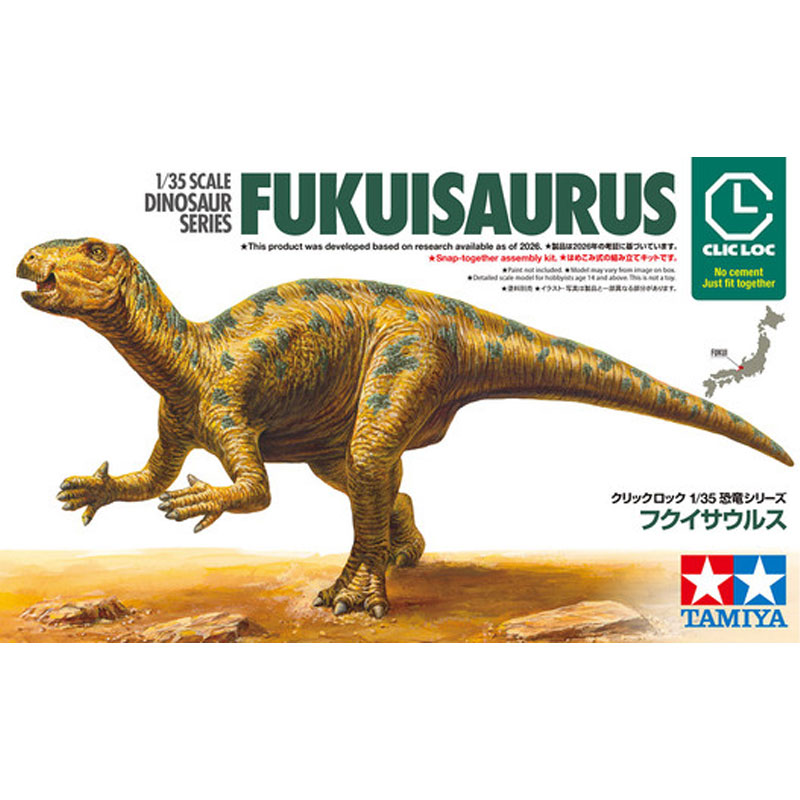
Tamiya Fukuisaurus (1/35) 28502
Out of stock
SKU: 28502
 Tamiya
Join the waitlist
Enter your email below and we will notify you when this item is back in stock.
Tamiya Plastic Model Kit
Fukuisaurus
The Tamiya Fukuisaurus in 1/35 scale recreates one of Japan’s most important dinosaur discoveries with impressive detail and scientific accuracy. Developed with support from the Fukui Prefectural Dinosaur Museum and the Faculty of Dinosaur Paleontology at Fukui Prefectural University, this snap-fit model captures the distinctive appearance of the prehistoric herbivore.
Part of the 1/35 scale figure and display kits range, the model features realistic body textures, detailed facial features, and a carefully researched body shape based on fossil evidence.
- 1/35 scale plastic model kit
- Snap-fit assembly, no glue required
- Approximate length: 130-140mm
- Detailed skin texture and facial features
- Display stand included
- 2D human comparison figures included
- Paper scenery background included
- Colour information leaflet included
The model accurately reproduces the stocky body, long forelimbs, and distinctive head shape of the Fukuisaurus. Fine moulded surface textures and carefully sculpted anatomical details help create a realistic finished appearance suitable for display or educational collections.
The included scenery background can be coloured and used as a display backdrop, while the comparison figures help illustrate the size of the dinosaur relative to humans.
History
Fukuisaurus was a herbivorous dinosaur that lived approximately 120 million years ago during the Early Cretaceous period in what is now Fukui Prefecture in Japan. It is believed to have reached around 5.2 metres in length and lived alongside predatory dinosaurs such as Fukuiraptor.
The dinosaur used its beak-like mouth to clip vegetation before grinding plant material with its rear teeth. Researchers believe it could move on both two and four legs depending on its activity and environment.
Fukuisaurus became one of the most important dinosaur discoveries made in Japan and contributed significantly to the growing international recognition of Fukui Prefecture as a major centre for dinosaur research.
Ongoing studies of fossils discovered in the region continue to improve scientific understanding of prehistoric life in Japan during the Early Cretaceous period.