
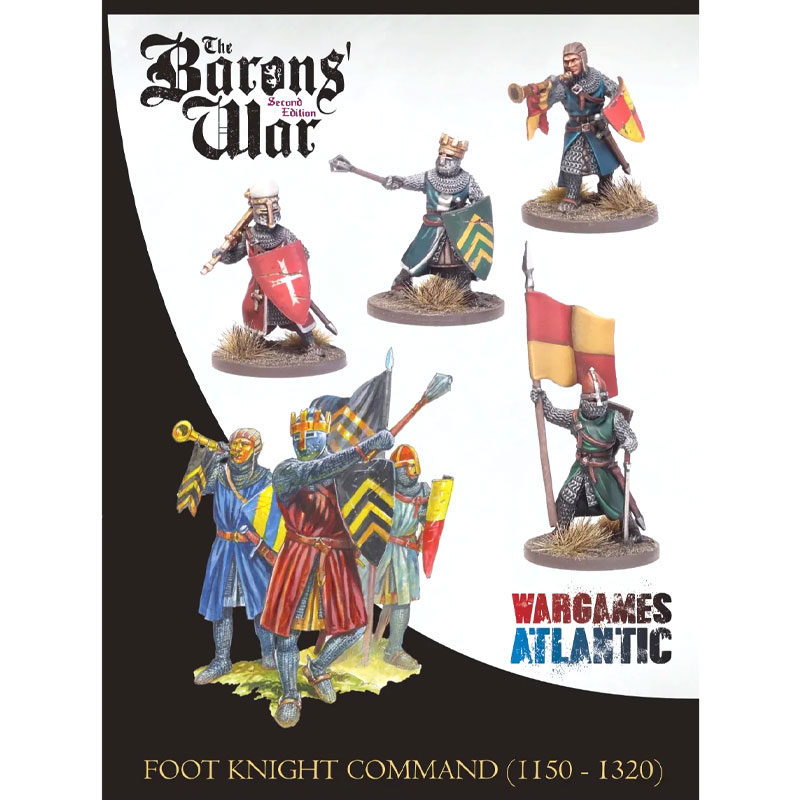
Wargames Atlantic Foot Knight Command (1150-1320) (28mm) WAAAC010
In stock
SKU: WAAAC010
 Wargames Atlantic
Wishlist and stock alertsLog in to save products or join back-in-stock notifications.
Wargames Atlantic Miniatures
Foot Knight Command (1150-1320)
The Wargames Atlantic Foot Knight Command set in 28mm scale recreates the leadership and support figures found within medieval armies during the High Middle Ages. Designed for use with The Barons’ War and other medieval wargaming systems, this hard plastic set allows builders to create detailed command groups filled with character and individuality.
Part of the wargaming miniatures range, the kit includes a wide selection of interchangeable parts, medieval weapons, heraldic accessories, and command equipment.
- 28mm scale hard plastic miniatures
- Builds a four-man medieval command group
- Includes banner bearer, commander, musician, and priest options
- 24 detailed head variants included
- Interchangeable weapons and arms
- Banner pole and banners included
- Compatible with other sets in The Barons’ War range
- Bases included
The set contains new leg poses and torso components designed specifically for command figures, together with a wide range of optional parts including swords, maces, shields, sacred symbols, books, and even a falcon-bearing arm for additional customisation.
Head options include crowned helmets, mitred helms, mail coifs, arming caps, and bare heads, allowing highly individual character creation suitable for medieval armies from the 12th to early 14th centuries.
History
During the medieval period, command groups played a vital role on the battlefield beyond simple combat duties. Nobles, banner bearers, musicians, and clergy all contributed to maintaining order, morale, and communication during battle.
Commanders directed troop movements while banners acted as visual rallying points amid the confusion of combat. Trumpeters and musicians carried signals across noisy battlefields, while priests and holy men offered spiritual support and encouragement to fighting men.
The period between 1150 and 1320 saw major conflicts throughout Europe, including dynastic wars, crusades, feudal disputes, and civil conflicts such as England’s Barons’ Wars. Armies increasingly relied on disciplined infantry and organised retinues led by heavily armed knights and noble households.
These command figures reflect the military culture of the High Middle Ages, where personal heraldry, religious symbolism, and feudal loyalty were central elements of warfare and battlefield identity.