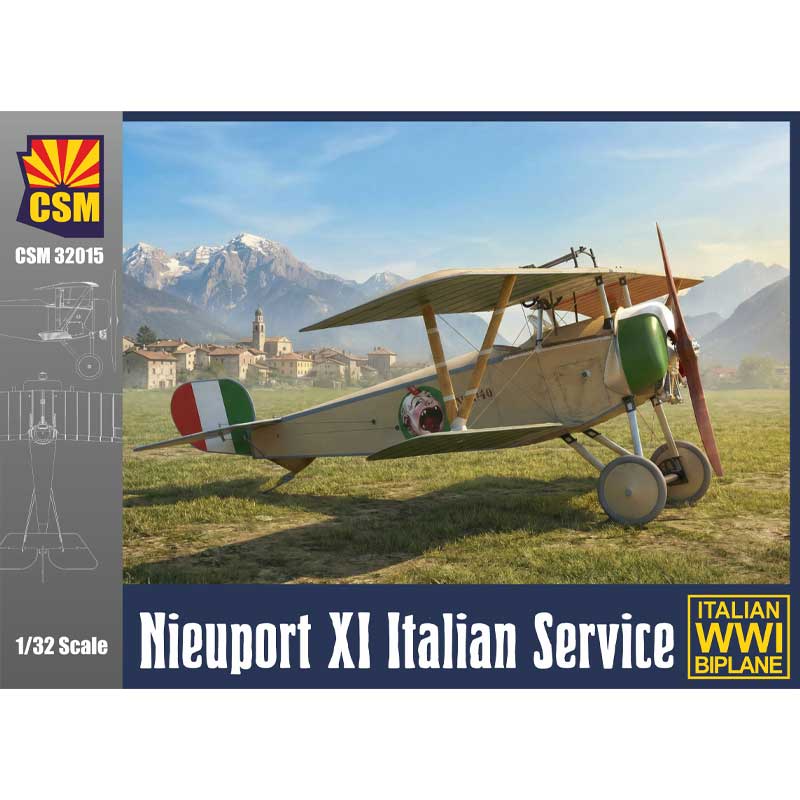

Copper State Models Plastic Model Kit
Macchi Nieuport XI – Italian Service (1/32)
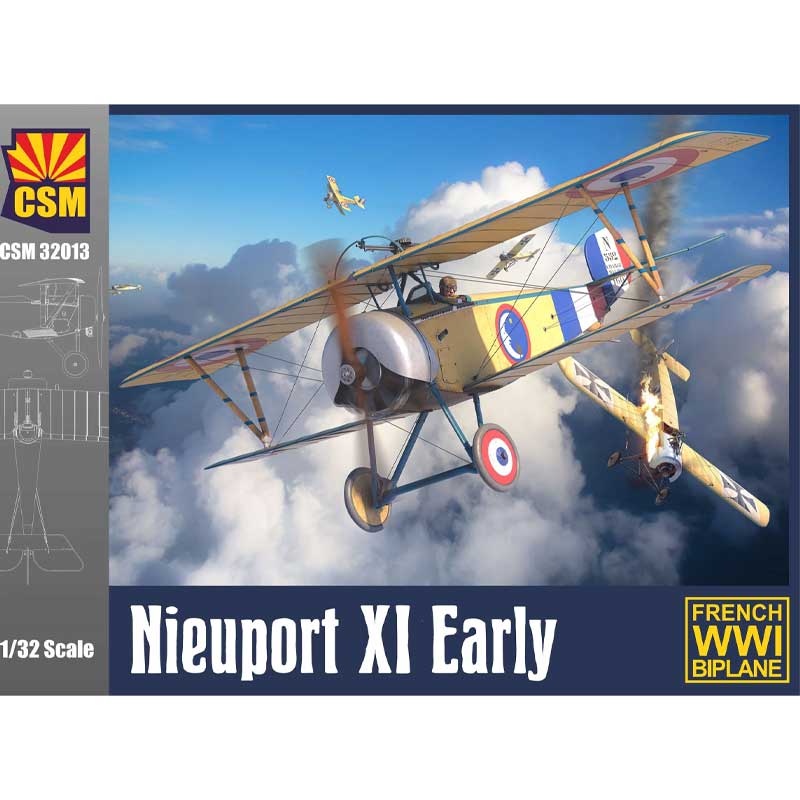
This 1/32 scale Macchi Nieuport XI from Copper State Models represents the Italian-built version of the famous French lightweight fighter, flown by the Servizio Aeronautico Militare during the First World War. Compact, agile, and deceptively simple, the Nieuport XI became one of the key aircraft that helped shift air superiority back toward the Allies in 1916.
The kit captures the delicate structure and characteristic sesquiplane layout of the aircraft, with finely moulded parts designed to reproduce the fabric surfaces, struts, and exposed framework typical of early fighters. Finished in Italian service markings, it offers a distinctive alternative to the more commonly seen French versions.
- 1/32 scale plastic model kit
- Macchi-built Nieuport XI in Italian service
- Highly detailed WWI fighter aircraft
- Accurate sesquiplane wing configuration
- Fine surface detail representing fabric and structure
- Ideal for First World War aviation displays
- Uncommon subject in large scale
History
The Nieuport XI, often nicknamed the “Bébé”, was originally designed in France as a lightweight and highly manoeuvrable fighter. Italy quickly recognised its potential and began licensed production through Macchi, supplying the aircraft to Italian squadrons operating primarily along the mountainous Italian Front.
Entering service in 1916, the Macchi-built Nieuport XI played a crucial role in countering Austro-Hungarian aircraft, providing Italian pilots with a nimble platform that excelled in dogfighting and interception. Armed with a single machine gun mounted above the propeller arc, it relied more on agility than firepower, reflecting the experimental nature of early aerial combat.
Though soon replaced by more powerful designs, the Nieuport XI marked an important turning point in WWI aviation. It demonstrated the value of dedicated fighter aircraft and helped establish air superiority as a decisive factor in modern warfare. Today, it stands as a symbol of the fragile but determined machines flown by pioneering combat pilots.