
Eduard Plastic Model Kit
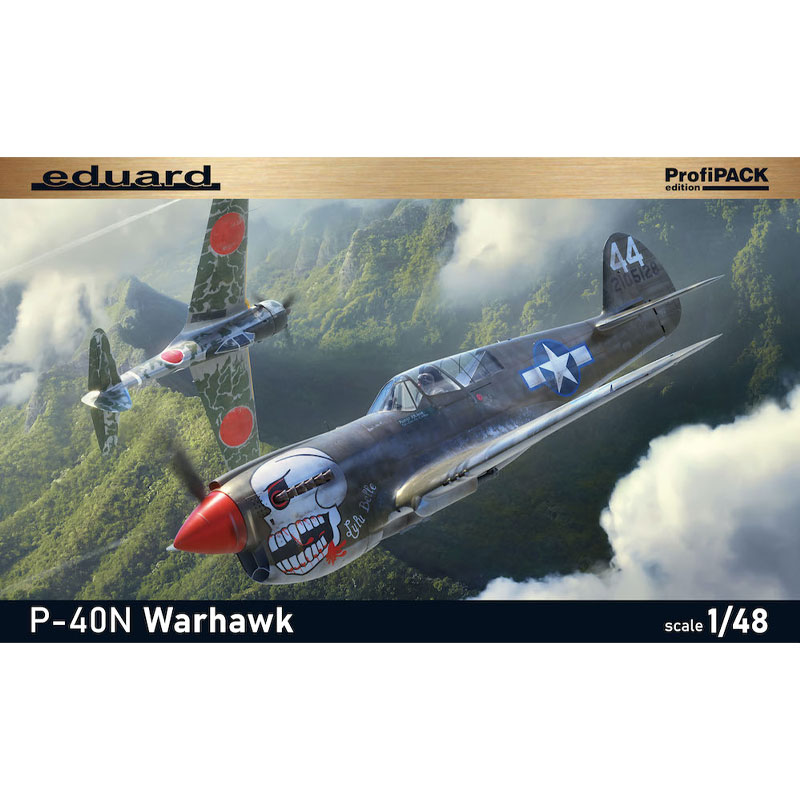
Curtiss P-40N Warhawk (ProfiPACK Edition) (1/48)
This ProfiPACK edition of the P-40N brings together Eduard’s sharp moulding with the sort of extras that make the build feel more complete right from the start. The panel lines are fine, the rivet detail is crisp and the parts break down in a way that gives the model a clean, confident shape once the fuselage and wing sections come together. Pre-painted photo-etch adds polish to the cockpit, and the included masks tidy up the canopy work without any fuss.
The kit offers six markings from USAAF and RAAF units, covering India, China, New Guinea and the Pacific islands in 1943–44. Each scheme has its own character, from shark mouths to theatre stripes and weather-beaten desert finishes. Decals are printed cleanly by Eduard and match the surface detail well. With no resin parts to complicate things, and the usual reliable engineering from Eduard, the kit strikes a nice balance between detail and an easy, steady build.
- 1/48 scale ProfiPACK edition
- Six WWII marking options (USAAF & RAAF)
- Pre-painted photo-etch parts included
- Eduard masks for canopy and wheels
- Eduard plastic mouldings
- Decals printed by Eduard
- No resin parts
- SKU: 82242
History
The P-40N was the final major development of Curtiss’s long-serving Warhawk series, refined to improve speed, range and overall handling. Introduced in 1943, it served across multiple theatres where rugged reliability mattered as much as outright performance. In the China–Burma–India theatre, P-40Ns flew ground attack and escort missions from remote, improvised airfields. In the Pacific, they supported island-hopping campaigns, operating in tough heat and humidity yet remaining dependable for daily sorties.
Pilots valued the Warhawk’s durability, good dive performance and steady gun platform, even as newer fighters arrived. The P-40N extended the type’s frontline life into late 1944, serving with American, Australian and allied units. Though never the fastest fighter of the war, it earned its place through resilience and the ability to keep flying in some of the hardest conditions of the conflict.