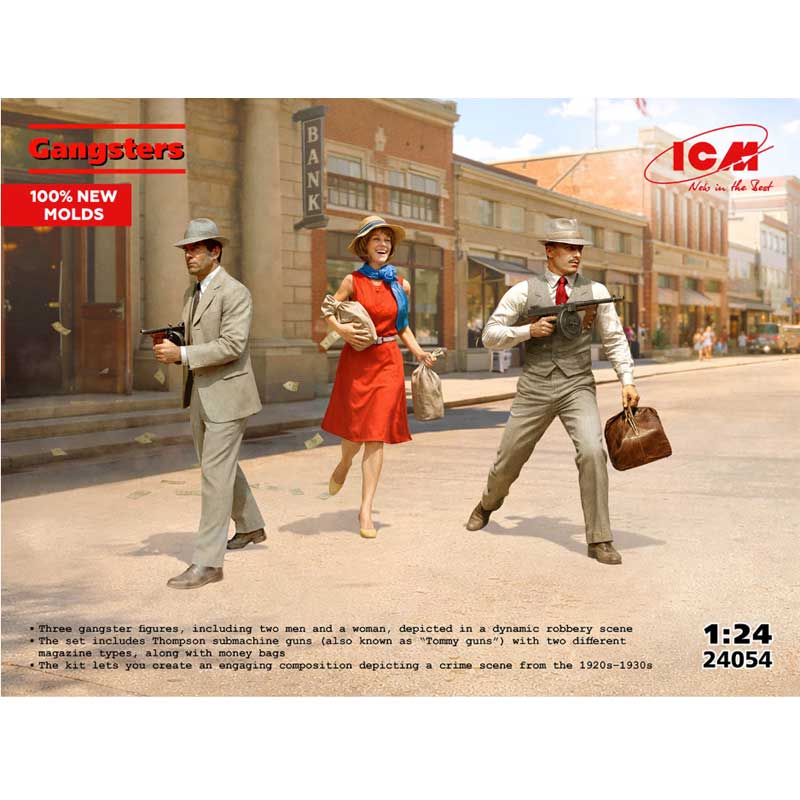
ICM 1920s Gangsters With Tommy Guns (1/24) 24054
In stock
SKU: ICM24054
MPN: 24054
 ICM
ICM
Wishlist and stock alertsLog in to save products or join back-in-stock notifications.
ICM Plastic Model Kit
1920s Gangsters With Tommy Guns (1/24)
This 1/24 scale figure set from ICM depicts a dramatic scene inspired by the gangster era of the late 1920s and early 1930s in the United States. Featuring three figures, including two men and a woman, the set captures the atmosphere of organised crime during a time of economic hardship and social change. The figures are posed dynamically, making them well suited for use in dioramas or as standalone display pieces.
The set includes detailed accessories that help bring the scene to life, including Thompson submachine guns and money bags. Different magazine options are provided for the weapons, adding variation and realism. The figures are sculpted to reflect period clothing and style, allowing modellers to recreate a convincing representation of this historical setting.
- 1/24 scale plastic figure set
- Includes three figures in dynamic poses
- Features Thompson submachine guns with multiple magazine options
- Includes money bags and accessories
- Suitable for diorama or display use
- Detailed parts with high accuracy
This set offers a strong foundation for creating narrative scenes, whether depicting a bank robbery or a moment from the criminal underworld of the period. The combination of figures and accessories allows for flexible composition and storytelling.
Note: This model kit requires assembly and painting. Glue, paints and tools are not included and must be purchased separately.
History
The late 1920s and early 1930s in the United States were marked by the Great Depression, a period of severe economic difficulty that had a profound impact on society. During this time, organised crime expanded significantly, with gangs becoming more structured and influential. Criminal groups operated across cities, engaging in activities such as bank robbery, smuggling, and other illegal enterprises.
Figures such as John Dillinger, Baby Face Nelson, Bonnie and Clyde, and Al Capone became widely known, often gaining notoriety through newspaper coverage of their exploits. Bank robberies in particular became symbolic of the era, combining elements of risk, speed, and defiance against authority. These events were often carried out with precision, relying on surprise and rapid escape.
One of the most recognisable weapons associated with this period was the Thompson submachine gun, commonly referred to as the “Tommy Gun”. Its high rate of fire made it a preferred choice for both criminals and law enforcement. As the decade progressed, improved policing and changing economic conditions led to the decline of this era of organised crime.
Today, the imagery of 1920s and 1930s gangsters remains a significant part of cultural history, often depicted in films, literature, and historical recreations. This set reflects that period, offering a snapshot of a time defined by both hardship and notoriety.
Discover more from this range