
ICM Plastic Model Kit
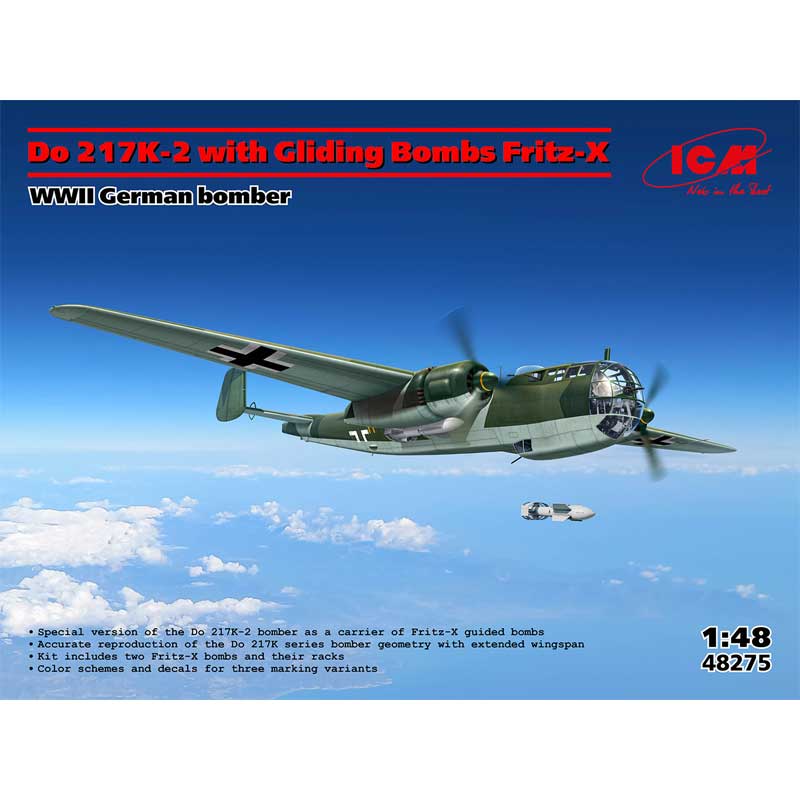
Do 217K-2 With Fritz-X (1/48) 48275
ICM’s 1/48 scale Do 217K-2 captures one of the most distinctive bomber variants fielded during the Second World War, designed specifically to deploy the Ruhrstahl Fritz-X guided bomb. This kit reflects the enlarged wingspan and reinforced structure that allowed the aircraft to carry the 1570 kg armour-piercing weapon, along with the additional forward fuel tank required to retain operational range. The model reproduces the unique geometry of the K-series airframe with clean, sharply moulded parts and refined surface detail throughout.
The kit includes two Fritz-X bombs with dedicated underwing racks, allowing a faithful recreation of the aircraft’s specialised strike configuration. Clear mouldings, detailed interior components, and precisely engineered assemblies support an accurate and rewarding build. Decal options for three marking schemes provide flexibility for display. With 233 parts and a wingspan exceeding half a metre once assembled, the model has a substantial and impressive presence.
- Specialised Do 217K-2 configuration for Fritz-X guided bombs
- Extended wingspan accurately reproduced
- Two Fritz-X bombs and racks included
- Three marking and colour scheme options
- Highly detailed plastic parts with refined surface detail
- Clear assembly instructions included
- Wingspan: 524 mm, length: 366 mm
- 233 parts, box size 410 x 260 x 55 mm
The Do 217K-2 played a pivotal role in the evolution of precision air-delivered munitions. Developed to carry the Fritz-X, one of the first operational guided bombs, this aircraft became a key component of Germany’s attempts to counter heavily armoured naval vessels. The Fritz-X, conceived by engineer Max Kramer, used radio-control guidance to strike battleships from high altitude. It carried a powerful 360 kg explosive charge capable of piercing up to 150 mm of armour. The most well-known operational success came on 9 September 1943, when a Do 217K-2 commanded by Major Bernhard Jope delivered the attack that sank the Italian battleship Roma. This event marked a defining moment in the early history of guided weapons and demonstrated the destructive potential of precision ordnance.