
Kotare Plastic Model Kit
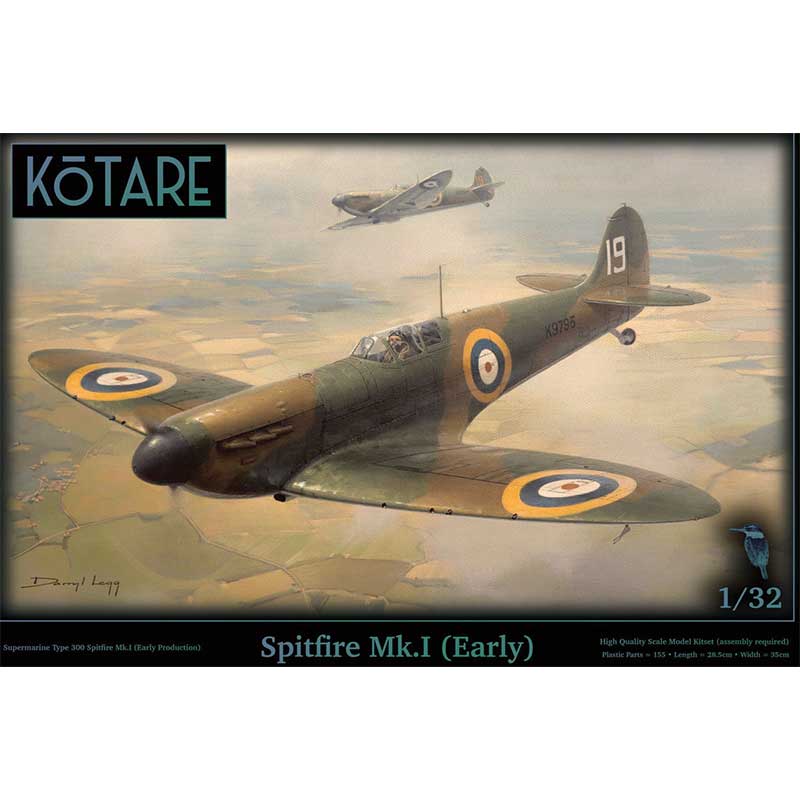
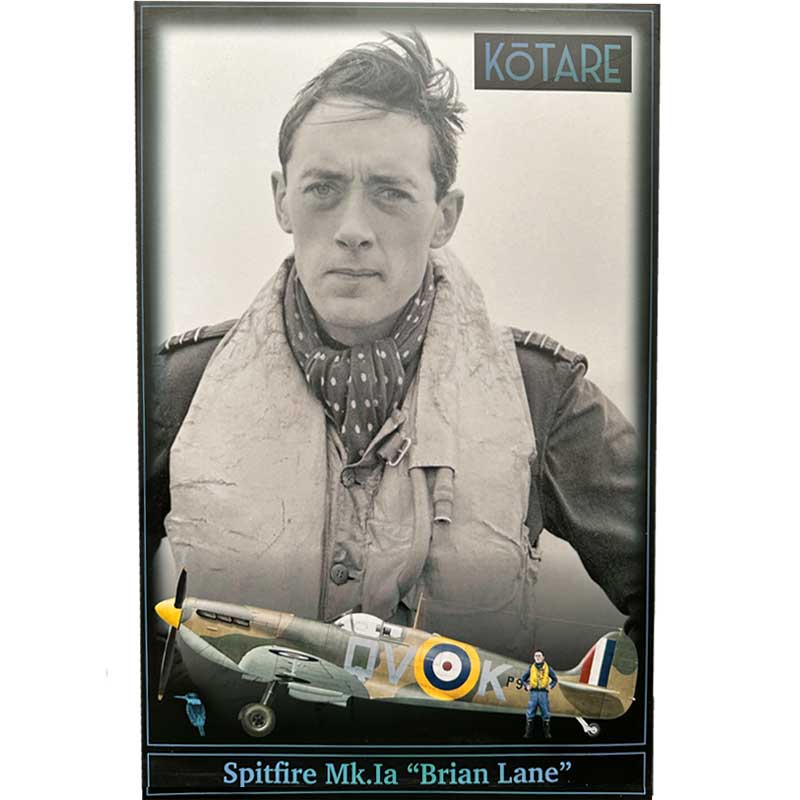
Supermarine Spitfire Mk I (Mid) (1/32)
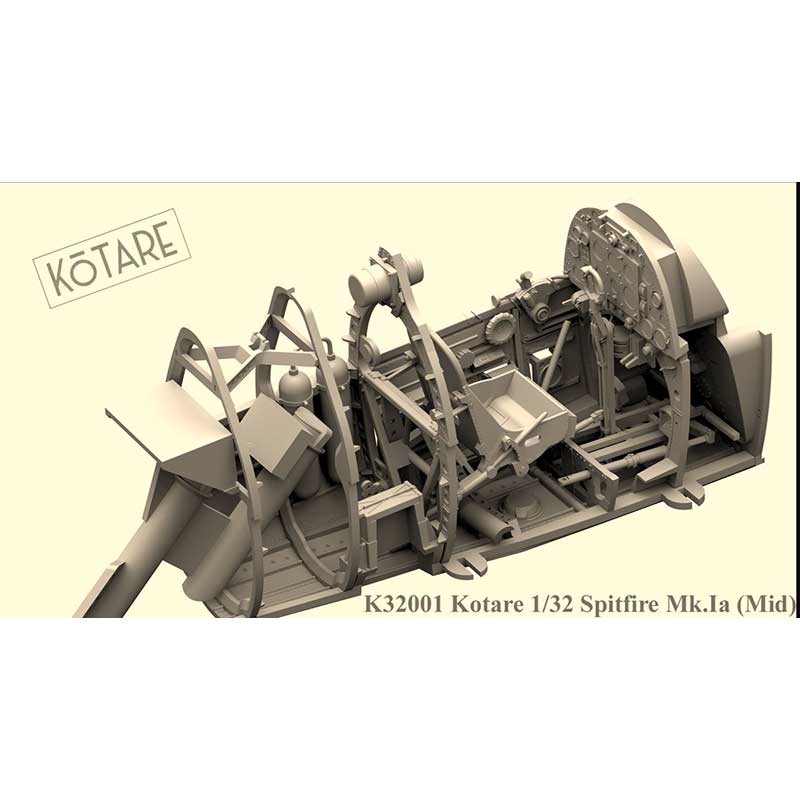
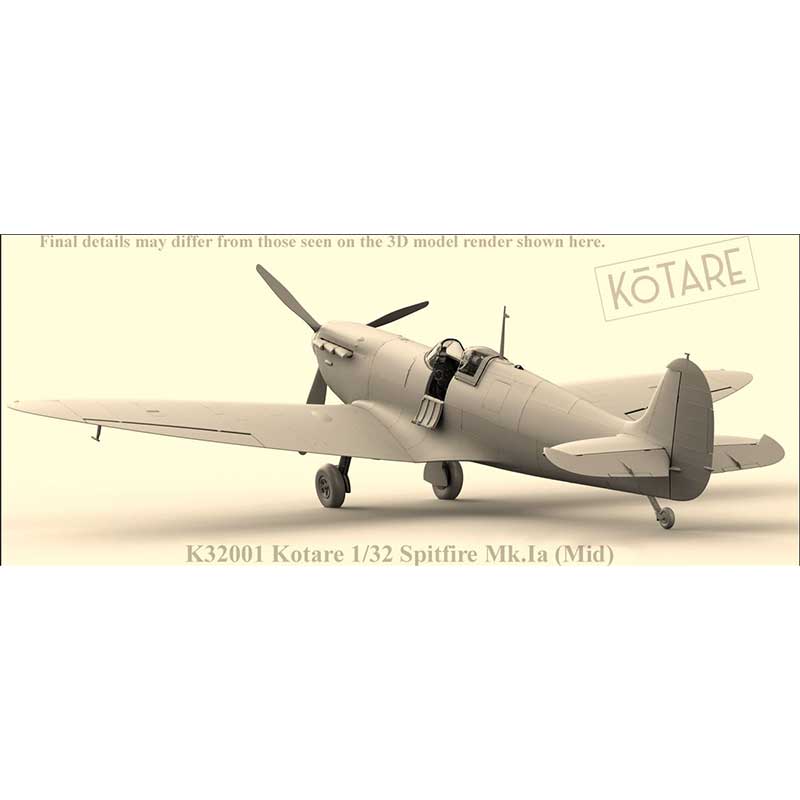
Working on a Spitfire always feels a bit like slipping into a familiar story, one you kind of know already but still find yourself drifting deeper into. Kotare’s take on the mid-production Mk I leans into that feeling. The parts count is lean enough to get moving without hesitation yet detailed in all the places that reward slowing down, picking up a small brush, and just sitting with it for a moment. The cockpit, especially, feels thoughtfully done, almost like the designers paused to let the space breathe. Options for seats, wireless outfits, doors, canopies, and propellers let you steer the build toward the exact point in the Mk I timeline that interests you.
The surface finish is crisp, with clean rivet work along the fuselage and wings that avoids that heavy-handed look some kits wander into. The weighted tyres, the hand-pump undercarriage details, even the flare tubes, they add up to something that feels grounded rather than flashy. Three Cartograf schemes round out the box, each with its own little window into the aircraft’s service life. And the 28-page instruction manual is the sort you flip through and think, yes, this is going to be a satisfying few evenings.
- 117 precision-moulded parts in 1/32 scale
- 35 cm wingspan with accurate mid-production geometry
- Optional De Havilland and Rotol propellers
- Optional TR.9D and TR.1133 wireless configurations
- Pilot seats with and without Sutton Type K harness detail
- Choice of open or closed doors, canopy, and hood
- Weighted wheels with correct alignment system
- Undercarriage pump and wheel well jack detail
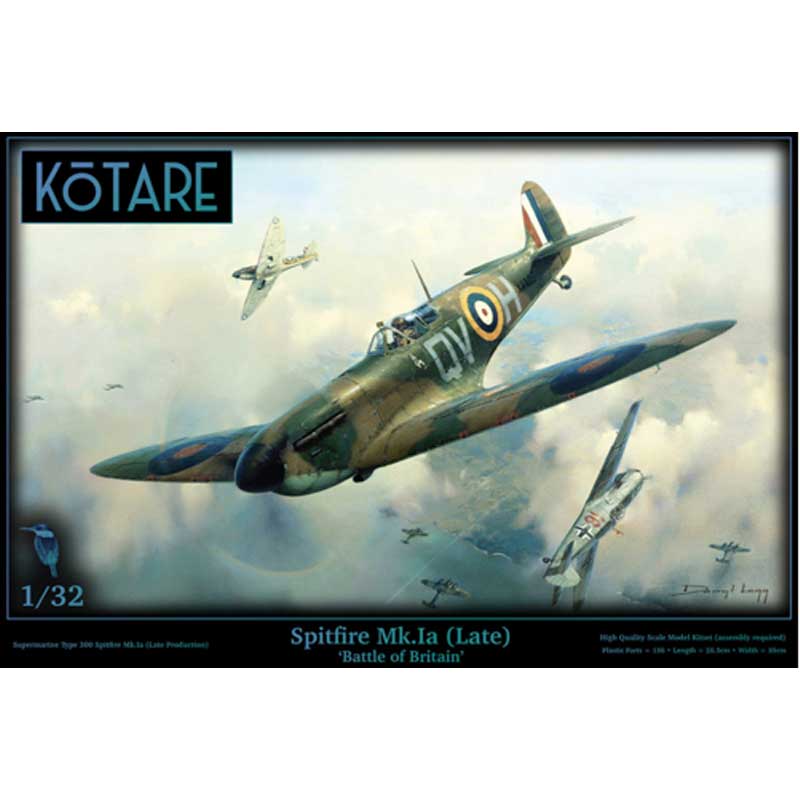
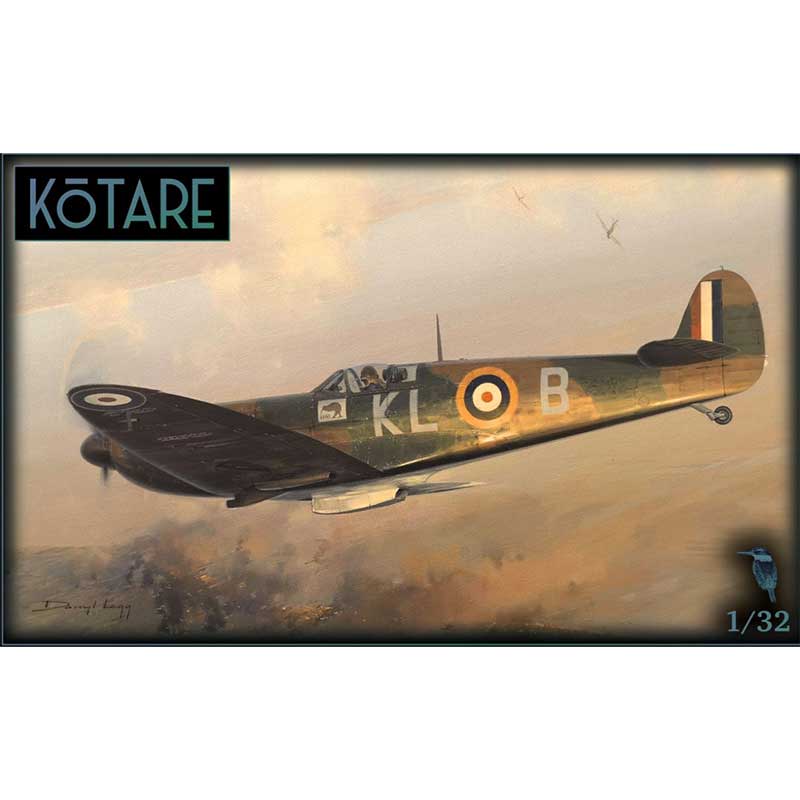
- High quality Cartograf decals for three mid-production Mk I schemes
- 28-page illustrated instruction manual
The Spitfire’s early history reads almost like a rush of ideas becoming reality, starting as the Type 300 in 1934 and flying just two years later with a Rolls-Royce Merlin that seemed almost too ambitious for its time. Production delays meant the first aircraft did not arrive until 1938, but once they did, they evolved quickly. Early Mk I machines carried fixed-pitch propellers, eight Brownings, and that tall aerial mast before improvements cascaded through the line. Merlin III engines, new exhausts, better visibility, armour, radio upgrades, and eventually constant-speed propellers turned the aircraft into something sharper, more capable, and more familiar to us now. By mid-production, changes were happening so quickly that no two airframes looked entirely alike. Paint schemes varied wildly, both in factory application and field repaints, and even the undersides wandered through black and white, aluminium, Sky, and every shade in between. That complexity is part of what keeps the Mk I interesting. It lived through a turbulent moment, adapting almost on the fly, and somehow becoming one of the most enduring shapes in aviation history.