
Kotare Plastic Model Kit
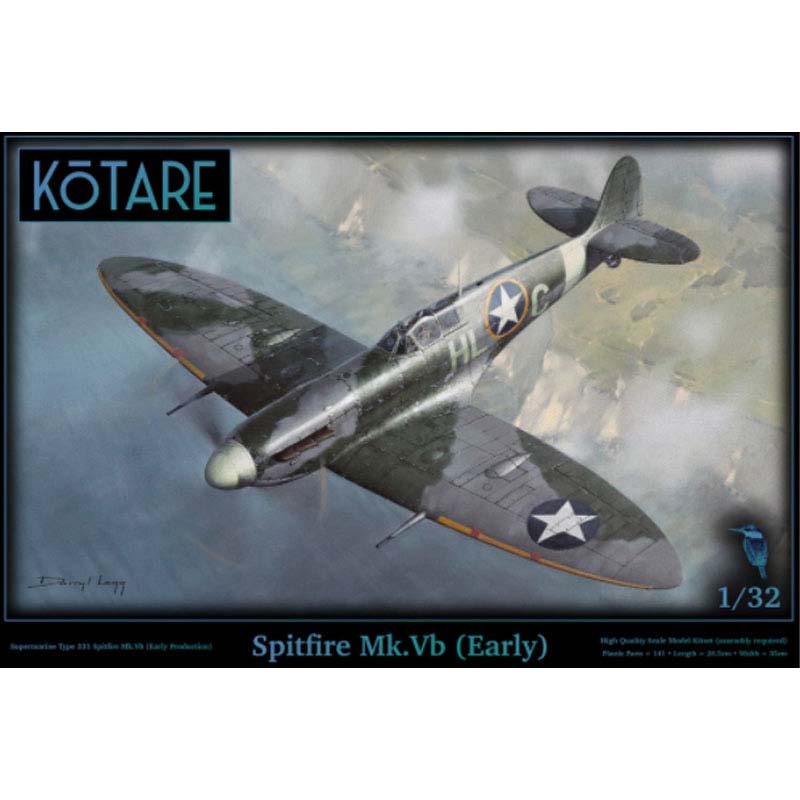
Supermarine Spitfire Mk.Vb (1/32)
This 1/32 scale Mk.Vb continues Kotare’s steady approach to clean engineering and carefully balanced detail. The kit includes 141 injection-moulded plastic parts, with 38 pieces newly tooled for this release, including completely new wings that capture the shape and surface texture of the Mk.Vb with a light, precise touch. The panel lines and rivet work feel restrained and tidy, giving the airframe a natural look once the major assemblies come together.
Decals are printed by Cartograf and cover three aircraft: RAF, Polish and USAAF options. Colour density and sharpness are excellent, and the schemes offer a nice spread of tones and markings for this mid-war variant. The 32-page instruction manual is fully illustrated and reads more like a well-organised guidebook than a simple assembly leaflet, taking you through the build with steady pacing and clear callouts. Once complete, the model spans around 35cm, giving it a confident display presence without overwhelming the shelf.
- 1/32 scale injection-moulded plastic model kit
- 141 parts total
- 38 newly tooled parts including new wings
- Three marking options (RAF, Polish, USAAF)
- High-quality Cartograf decals
- 32-page fully illustrated instruction manual
- Approx. 35cm wingspan
- SKU: K32006
History
The Spitfire Mk.V became the most numerous and widely used version of the aircraft, entering service from early 1941 and carrying the RAF through a demanding period of rapid operational change. The Mk.Vb variant paired the Merlin 45 engine with the “b-wing” configuration, giving pilots two 20mm cannon and four machine guns, a combination suited to interception, escort and low-level attack duties.
It served across multiple theatres: over the Channel Front, in the Western Desert, across the Mediterranean and later in the defence of Malta. Polish and American units also flew the Mk.Vb, each adding their own markings and adaptations. Despite the arrival of stronger Axis fighters, the Mk.Vb held its place through reliability, agility and the straightforward behaviour that pilots valued. It remains one of the most recognisable and well-documented Spitfire marks, bridging the gap between the early Battle of Britain machines and the later high-performance variants that followed.