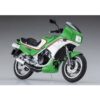
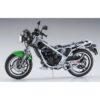
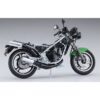

Hasegawa Plastic Model Kit
1984 Kawasaki KR250 (KR250A)
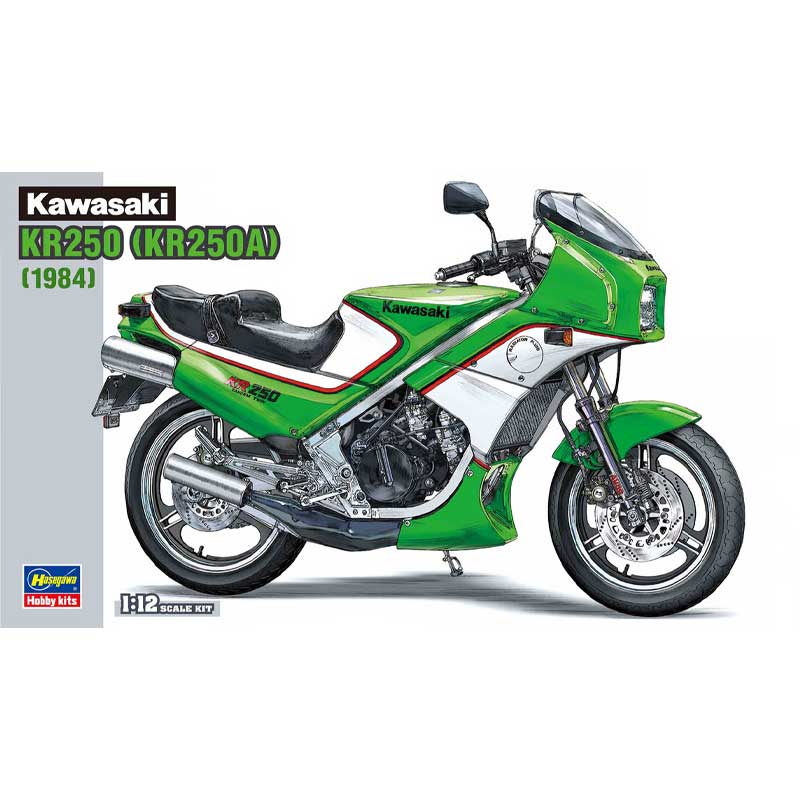
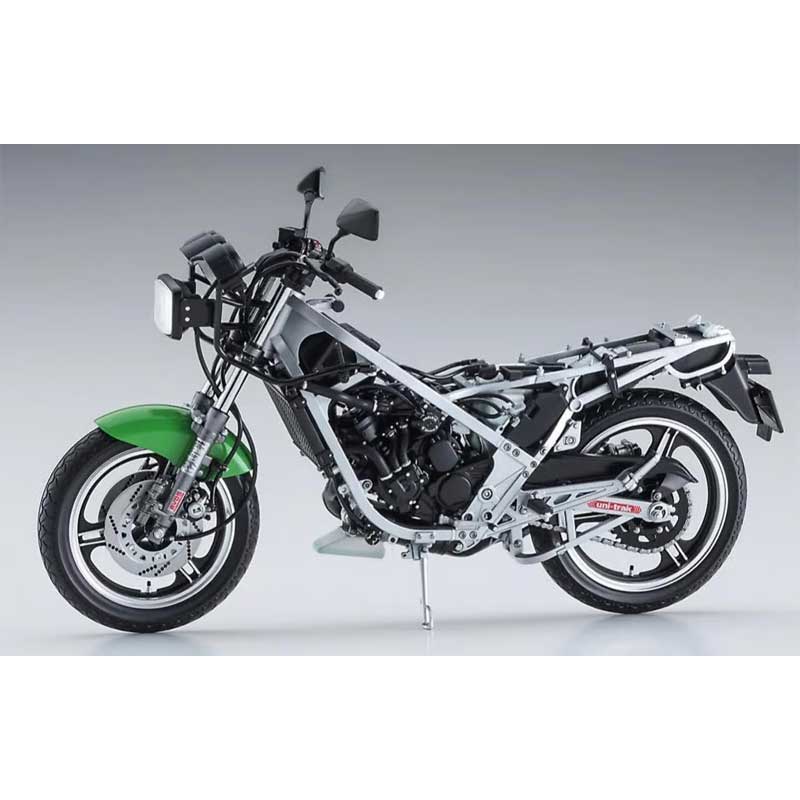
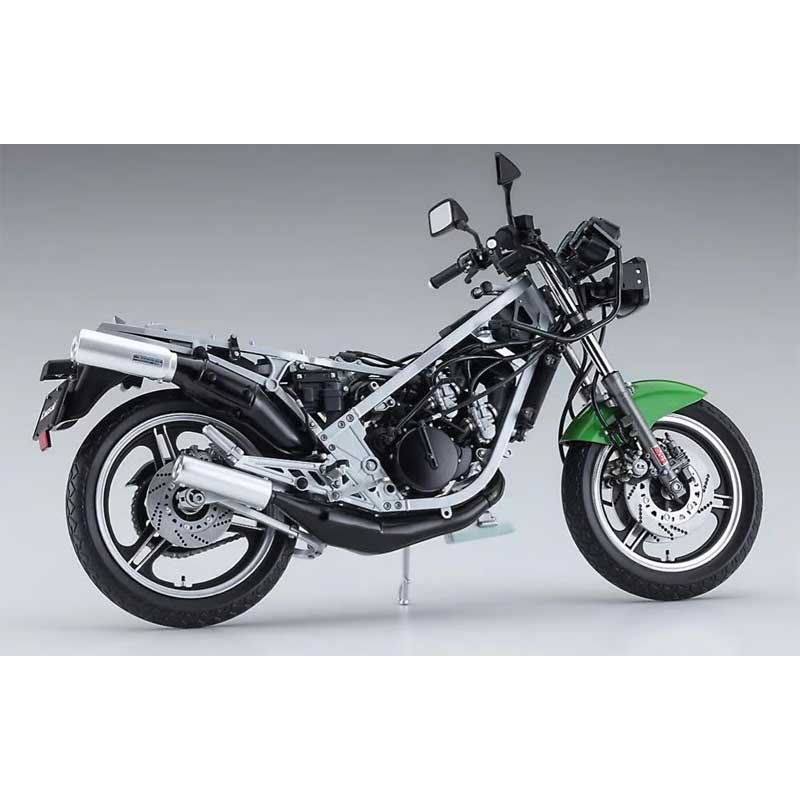
This 1/12 scale kit from Hasegawa recreates the distinctive Kawasaki KR250A, the brand’s first two-stroke racer replica released in 1984. Known for its unusual engineering and bold styling, the KR250 featured a tandem twin-cylinder layout, with the cylinders arranged front to back, setting it apart from conventional parallel twin designs of the era.
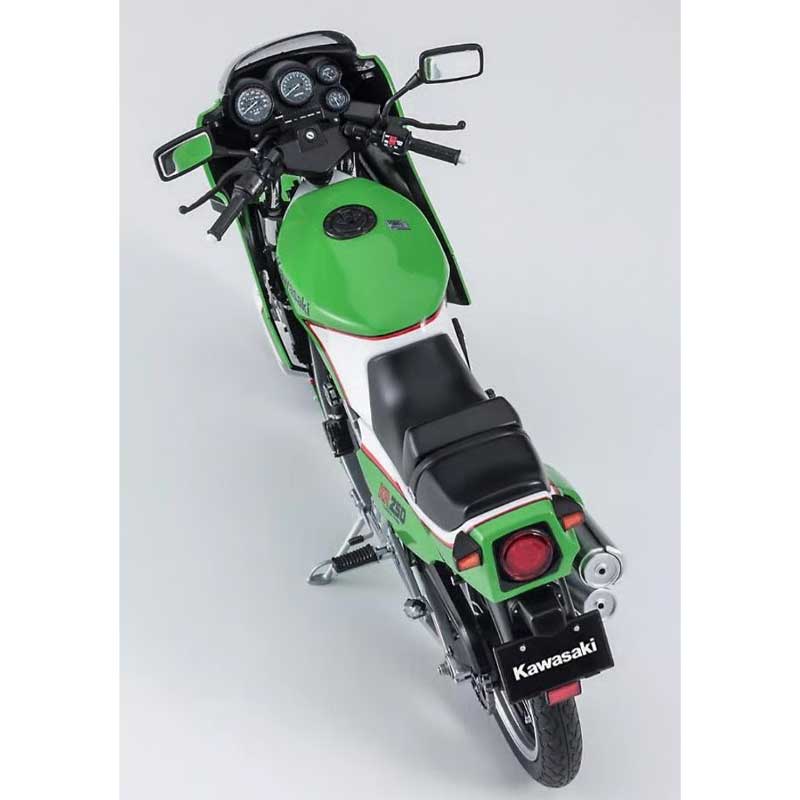
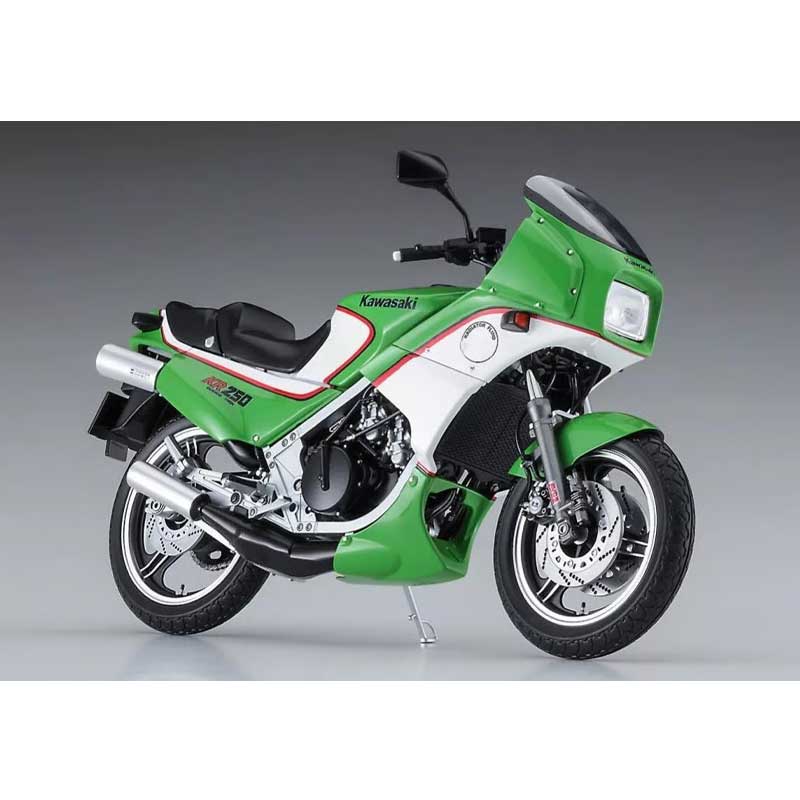
The model is based on detailed research of the real motorcycle and has been produced using completely new moulds to ensure accuracy. It can be built with the cowl removed to reveal the internal structure, and includes optional parts to recreate the single-seat configuration. A mix of coloured, clear and plated components enhances the overall realism and allows for a clean, detailed finish.
- 1/12 scale plastic model kit of Kawasaki KR250A
- Features unique tandem twin two-stroke engine layout
- Accurate reproduction based on real vehicle research
- Optional cowl removal to display internal detail
- Includes parts to build single seat version
- Plated parts for headlights and mirrors
- Clear parts for screen
- Green parts for cowl and fuel tank
- Medium grey parts for engine and frame
- Black parts for exhaust and seat
- Model length approximately 168mm
- Model width approximately 59mm
History:
The Kawasaki KR250A was introduced in 1984 as Kawasaki’s entry into the growing racer replica market. Drawing inspiration from the KR250 Grand Prix machines that had dominated racing in previous years, it featured a highly unconventional tandem twin engine, designed to improve aerodynamics and centralise mass. This setup, combined with the innovative RRIS (Rotary & Reed Valve Intake System), gave the bike a unique character and strong performance for its class.
Although its complex design set it apart from competitors, the KR250 gained a loyal following thanks to its racing pedigree and distinctive appearance. It remains one of the most recognisable and technically interesting two-stroke sport bikes of the 1980s, representing a period when manufacturers were experimenting boldly with engineering concepts in pursuit of performance.