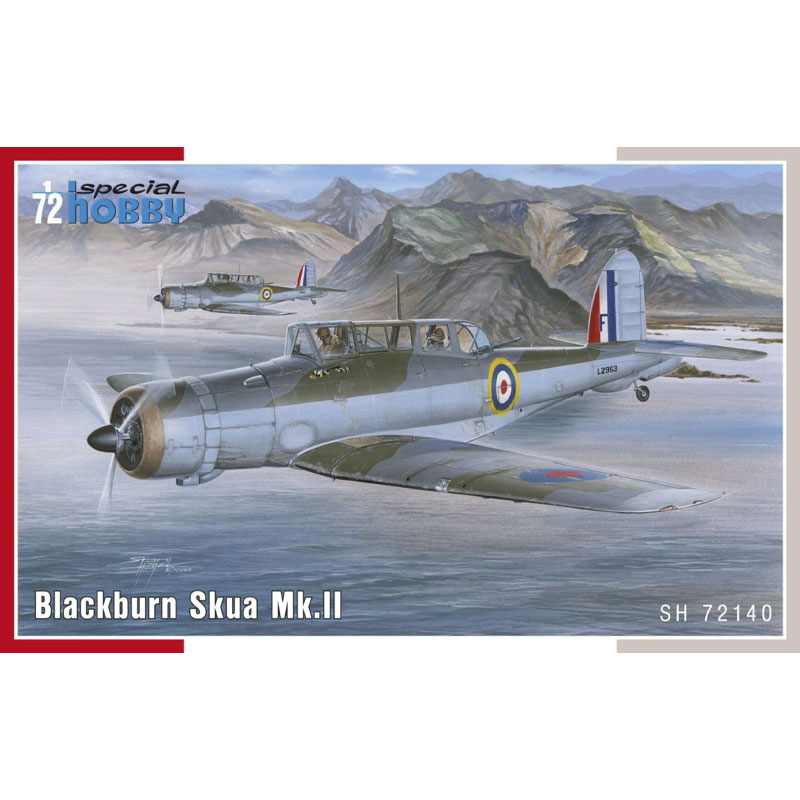
Special Hobby Blackburn Skua Mk.II (1/72) SH72140
In stock
SKU: SH72140
 Special Hobby
Wishlist and stock alertsLog in to save products or join back-in-stock notifications.
Special Hobby Plastic Model Kit
Blackburn Skua Mk.II
This 1/72 scale kit from Special Hobby represents the Blackburn Skua Mk.II, a carrier-based aircraft designed for both fighter and dive-bomber roles. The model captures the distinctive features of this early WWII aircraft, including its low-wing design and naval adaptations.
Part of the 1/72 aircraft model kits range, the kit includes a combination of plastic, clear, photo-etched, and resin parts to provide a detailed build. Multiple marking options are included, allowing different Fleet Air Arm schemes to be represented.
- 1/72 scale plastic model kit
- Includes grey plastic sprues and clear parts
- Photo-etched and resin (PUR) detail parts included
- Decals for 3 Fleet Air Arm marking options
- Detailed cockpit and surface features
The mix of materials allows for enhanced detail, particularly in smaller components and surface textures. The inclusion of resin and etched parts helps achieve a more refined finish compared to standard kits.
History
The Blackburn Skua was developed in response to a 1934 Air Ministry requirement for a multi-role naval aircraft capable of operating from aircraft carriers. Designed as both a fighter and dive bomber, it reflected the Royal Navy’s early concept of a two-seat fighter intended for long-range patrol and reconnaissance interception rather than direct combat with enemy fighters.
The Skua Mk.II, powered by the Bristol Perseus engine, entered service just before the outbreak of the Second World War. Although already considered outdated as a fighter, it quickly saw combat, achieving the first confirmed British aerial victory of the war when a Skua shot down a Dornier Do 18 in September 1939.
It was also involved in several notable operations, including the Norwegian Campaign, where Skuas successfully sank the German cruiser Königsberg. This marked one of the first major air attacks against a warship during the conflict. The aircraft also saw action in the Mediterranean and during the Dunkirk evacuation.
Despite its achievements, the Skua’s performance limitations led to its withdrawal from frontline combat roles by 1941. While its service life was relatively short, it played a key role in the early years of naval aviation during the war.
Discover more from this range