A panel line wash can make a neatly painted model look far more convincing in the space of a few minutes. Done well, it settles into recessed detail, sharpens surface definition and adds subtle depth without burying the paintwork underneath. If you are learning how to use panel line wash, the real trick is not simply applying it – it is matching the wash to the surface, the paint system and the finish you want.
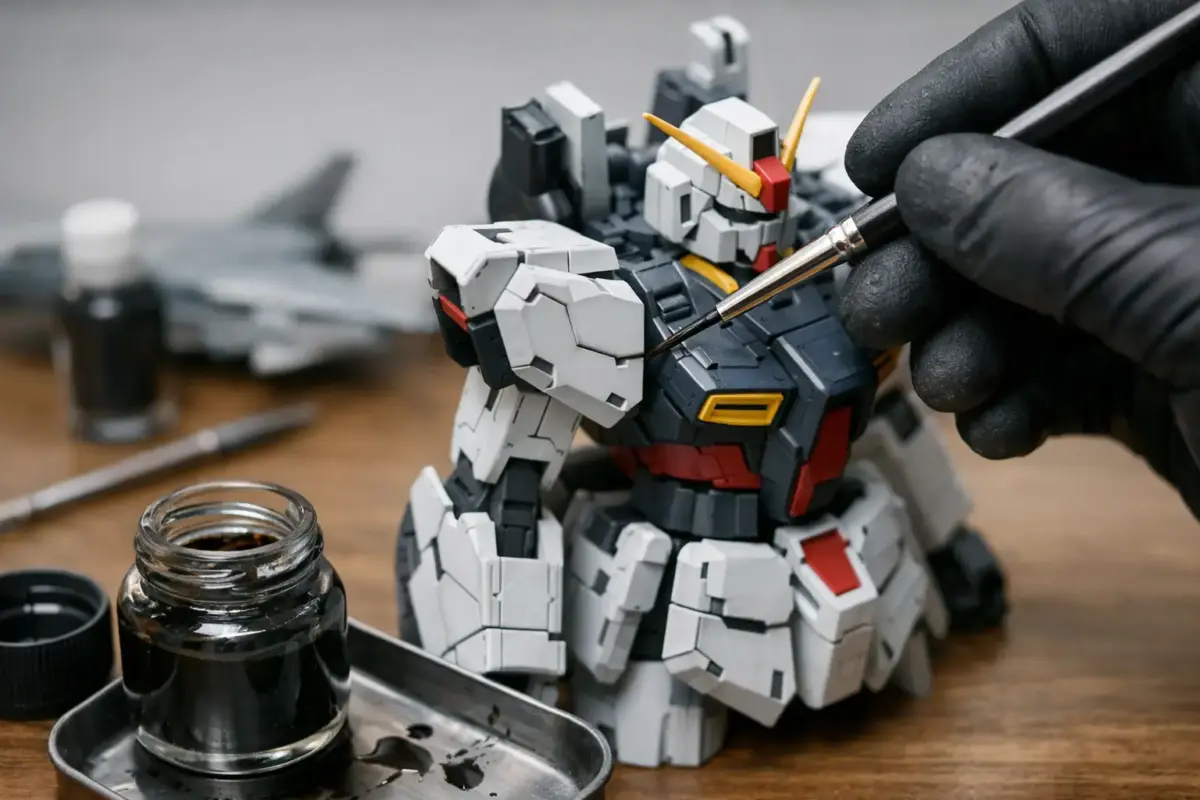
For most scale modellers, panel line wash occupies that crucial stage between base painting and final weathering. It is one of the quickest ways to bring out engraved lines on aircraft, hatch detail on armour, deck planking on ships and even hard-surface detail on Gundam kits. It is also one of the easiest products to overdo, especially if the surface is too matt, the wash is too dark or the thinner is too aggressive for the paint below.
What a panel line wash actually does
A panel line wash is a very thin, low-viscosity paint designed to flow into recessed detail by capillary action. Rather than coating the whole model like a filter or overall wash, it is meant to collect in panel lines, around rivets, bolts, grilles and other engraved features. That darker line creates contrast and helps the eye read the shapes more clearly.
On an aircraft model, this often means emphasising access panels, control surfaces and fastener lines. On armour, it may be used around weld seams, hinges, engine decks and cast texture transitions. On ships and sci-fi subjects, it can break up larger surfaces and stop a finish from looking too flat or toy-like.
The key point is restraint. A panel line wash should support the paintwork, not dominate it. Heavy black lines on every recess rarely look realistic, particularly in smaller scales.
How to use panel line wash on different finishes
Before you touch the model, look at the surface sheen. This matters more than many beginners expect.
A gloss or satin varnish is usually the safest surface for panel line work. The smooth finish helps the wash run along engraved lines and makes cleanup much easier. If you apply a wash straight onto a very matt surface, it tends to grab the paint, spread into surrounding texture and leave tide marks or staining. That can be useful if you deliberately want a dirtier, weathered result, but it is less forgiving.
If your model is painted with acrylics, a common approach is to seal it with a clear gloss and then use an enamel or oil-based wash. This gives you working time and allows controlled cleanup with the appropriate thinner. If your paint layers are enamel, you need more care. In that case, many modellers prefer an acrylic gloss barrier and a compatible wash system that will not reactivate the underlying coats.
This is where product compatibility matters. It is always worth checking whether your chosen wash and thinner are safe over the paint and varnish already on the model.
Choosing the right wash colour
Pure black is often the first choice people reach for, but it is not always the best one. Black can look stark on light grey aircraft, sand-coloured armour and white naval finishes. A dark grey, brown-grey or earth tone often gives a more convincing scale effect.
For modern aircraft in grey schemes, a medium grey or blue-grey wash can define panels without making them look outlined. For green and brown camouflage, dark brown usually reads more naturally than black. On armour, earth, dark brown and grime shades tend to work well because they tie in with dust, oil and operational wear. On ships, darker grey or muted brown can suit deck detail and hull recesses better than heavy black.
There is no single correct answer here. Scale, subject and finish all affect the choice. A 1/72 aircraft generally benefits from subtler contrast than a larger 1/35 armoured vehicle.
The basic method for applying a panel line wash
The simplest answer to how to use panel line wash is this: apply it selectively, let capillary action do the work, then clean back the excess.
Start with a fully cured painted model, ideally protected with a gloss or satin coat. Shake or stir the wash thoroughly. With a fine brush, touch the tip into the panel line or recess rather than painting it on like a normal coat. If the surface is smooth enough, the wash should flow along the engraved detail on its own.
Work in manageable sections rather than trying to cover the entire model at once. On an aircraft, you might complete one wing, then the fuselage side, then the tailplane. On armour, you may work around the turret, then the hull top, then the running gear details. This gives you control over drying time and cleanup.
Once the wash has had a little time to settle – often a few minutes, depending on the product – remove the excess with a cotton bud, soft cloth, sponge applicator or flat brush slightly dampened with the correct thinner. Wipe across the panel line rather than along it. That lifts residue from the surface while leaving the recess detail intact.
If you wipe too soon, you may pull the wash straight out of the line. If you leave it too long, cleanup becomes harder. That timing varies by brand, room temperature and how much wash has been applied, so testing on a spare part or old model is always worthwhile.
Where beginners usually go wrong
The most common mistake is applying the wash over a rough matt finish and expecting clean, sharp lines. The second is using far too much product. You do not need to flood the model. A small amount placed accurately is usually enough.
Another issue is using the wrong thinner for cleanup. If the thinner is too hot for the varnish or paint underneath, you can soften or mark the finish. Even when products are technically compatible, heavy rubbing can still wear through edges and raised detail.
Colour choice is another weak point. If every panel line is dark black, the model can start to look diagrammatic rather than realistic. This is especially noticeable on lighter subjects and smaller scales.
Finally, some modellers treat panel line wash as a substitute for all weathering. It is not. It adds definition, but realism usually comes from several lighter effects working together – tonal variation, streaking, dust, exhaust staining and selective chipping where appropriate.
How to use panel line wash for aircraft, armour and ships
Aircraft usually reward a lighter touch. Focus on major control surface lines, access panels and selected fasteners rather than forcing every engraved line to the same intensity. Upper surfaces often look best with subtler contrast than undersides.
Armour is more flexible. Alongside panel lines, washes can be used around bolts, tool clamps, engine grilles, turret ring detail and welds. Here, a dirtier finish often makes sense, especially if the vehicle is intended to look operational rather than factory fresh.
Ships can be surprisingly effective with careful panel line work, but scale is critical. Fine deck and superstructure detail benefits from controlled contrast, while oversized dark recesses can quickly overpower the model. On naval subjects, grey-based washes are often more convincing than harsh black.
When to seal the wash
Once you are happy with the result and everything is fully dry, apply a clear coat to protect it before moving on to additional weathering. The finish you choose depends on the final look you want. Satin or matt are common end stages for military subjects, while some aircraft and automotive subjects may retain a slight sheen.
Sealing also helps unify the finish. A wash can sometimes leave slight variation in surface sheen, especially where cleanup has been more aggressive in some areas than others.
A few product and workflow considerations
Pre-mixed panel line washes are convenient and consistent, which is why many modellers prefer them for routine work. They are especially useful if you want predictable flow and straightforward cleanup. Oil paints mixed with thinner can offer more control over colour and drying time, but they are slower and demand a bit more experience.
Good lighting helps more than fancy tools here. So does a clean fine brush reserved for washes, plus separate brushes or applicators for cleanup. If you are working across multiple subjects, keeping different wash tones for grey aircraft, green-brown armour and naval finishes can make your results look more considered.
For modellers building a full project from primer through to final weathering, having compatible paints, varnishes, thinners and weathering products on hand saves a lot of frustration. That is often the difference between an enjoyable finishing stage and one spent trying to rescue reactions between layers.
Panel line wash is one of those techniques that rewards patience very quickly. Start lighter than you think you need, test on spare parts when using a new product combination, and let the engraved detail do the work. If the effect looks natural at normal viewing distance, you are on the right track.
